


The 3 Rs… Reduce, Reduce, Reduce
June 6, 2025 | Cassie Cramer
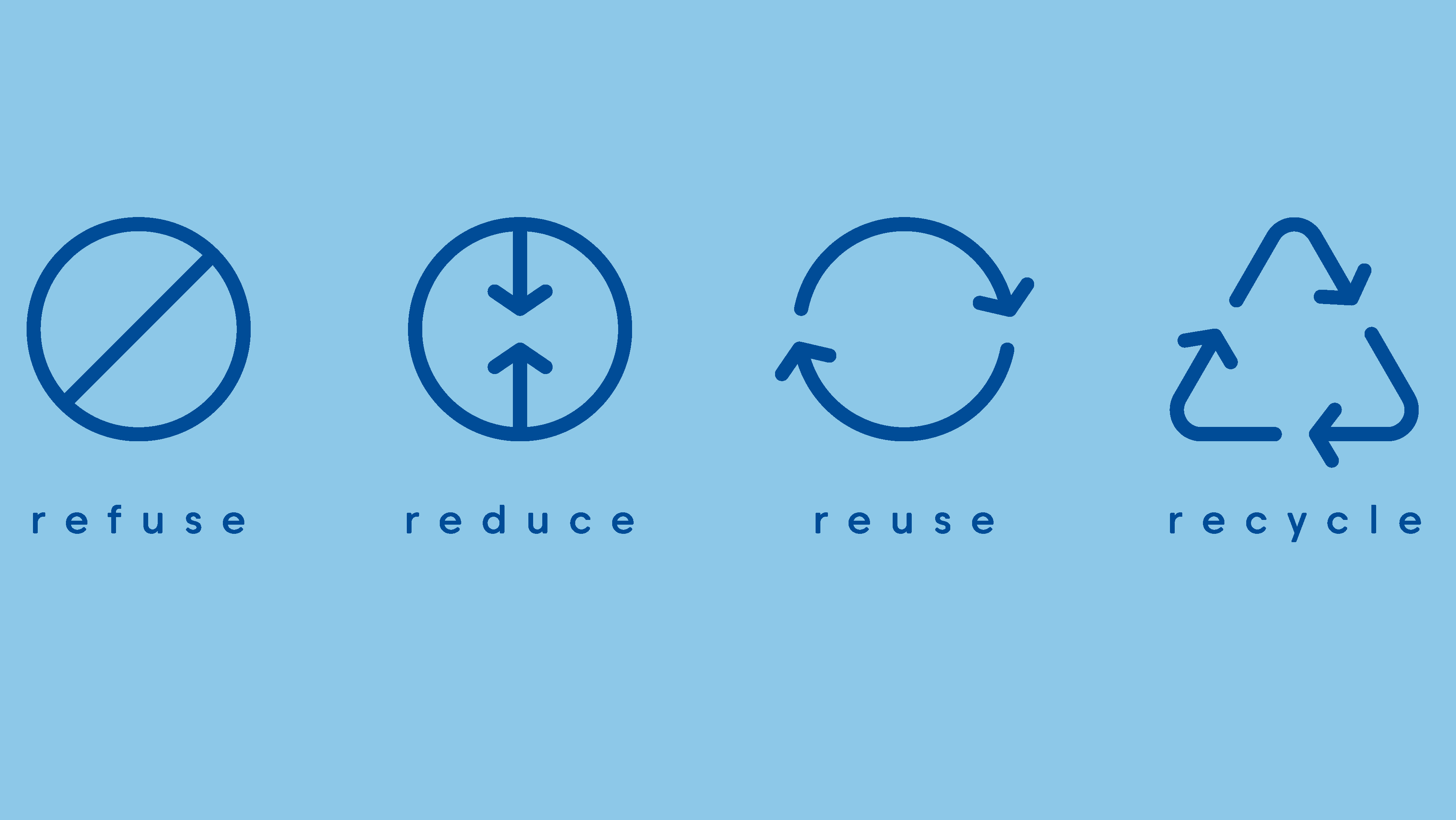
While many remember hearing the importance of the “3 Rs” growing up, we now recognize an even better option, Refusing, really giving us the “4 Rs”. A great example of refusing is bringing your own bags to the grocery store. This option avoids all the impacts from the extraction, production, and transportation of the resources needed to get you a product. Refusing to purchase single-use items is step one in reducing our impacts as consumers. When refusing isn’t possible, then we follow the “3 Rs”.
Reducing vs. Reusing
Reducing is often considered better than reusing. It prevents waste and conserves resources from the very beginning. While both reducing and reusing are important for sustainability, reducing has a more significant environmental impact. Reduction ensures we avoid the creation of waste in the first place. By choosing not to buy unnecessary items or selecting products with minimal packaging, we eliminate waste before it is generated. Although reusing seems to address this problem, it still involves dealing with products already created, which means resources were still extracted and used in manufacturing. By reusing versus reducing the products we buy, we may slightly alleviate some issues, but the initial problem is still there.
Reducing directly decreases the demand for raw materials. Initial manufacturing (even for reusable products) requires energy and natural resources. By reducing these processes, the impacts are minimized or avoided altogether. Reusing items is beneficial but doesn’t diminish the original environmental footprint of producing the items. While reusing products extends their lifespan and delays waste disposal, it cannot eliminate the issues generated during initial production. Unfortunately, reusing certain products can also be harmful to the consumer. Plastics and other similar materials can degrade with repeated use and can expose the consumer to harmful chemicals and other hazards. Reusing also tends to generate more pollution than reducing. The initial production and transportation of products generate emissions and waste. Reusing may still involve transportation and energy use, especially for restored or repaired products and reducing consumption lowers pollution levels associated with these processes. Reduction also prevents greenhouse gas emissions from manufacturing, packaging, and waste management.
While reusing is better than recycling and discarding, reducing is still the best option when it comes to sustainability. Reusing often depends on the availability of durable goods, but reducing consumption prevents the purchase of single-use or unnecessary items in the first place. Practicing reduction promotes an awareness of consumption habits and encourages people to prioritize quality over quantity by choosing products designed for longevity.
Reducing vs. Recycling
Like reusing, reducing is also considered to be more effective than recycling because it addresses the root cause of waste generation. Reduction ensures consumer products are purchased less and minimizes the initial waste associated with production. The manufacturing of products (even if they are from recyclable materials or come from the processes of recycling itself) consumes raw materials like water, minerals, trees, and fossil fuels. Reducing consumption helps to decrease the demand for the resources overall and assist in the preservation of these natural ecosystems. Recycling also requires more energy than reducing. By collecting, transporting, cleaning, and re-processing the materials into “new” products, recycling actually uses a large amount of energy. Reduction on the other hand, eliminates the need for these intensive processes which also reduces carbon emissions in addition to conserving energy.
By mitigating the carbon emissions, reducing over recycling also moderates pollution. Not only are carbon emissions created by the recycling process but by the initial production process as well. The initial production process of most goods can generate additional pollution which includes other air emissions, water pollution, and generates landfill waste. By reducing consumption, we can lower the overall environmental impacts by limiting pollution at every stage of a product's life cycle.
Not only can the waste production and pollution be managed when choosing reducing over recycling, can also help to support a better economy. It seems counterintuitive to improve the economy by buying less, but reduction encourages smarter product designs and sustainable consumption habits. It promotes durable, reusable, and repairable products instead of single-use items. It can also help the consumer to save more money. Consuming less, in general, implies spending less on unnecessary products. Businesses can also benefit with this mindset by cutting materials and production costs.
Although recycling is better than disposal (when available), it definitely has its drawbacks. Not all materials that we use are recyclable, and in that case, recycling is not even an option. Many items (even when placed in “recycle” bins) often end up in landfills, which adds to the overall waste generation. Reducing stops this problem at its source.
Finally, one of the best recycling activities we can do is compost our food scraps. This allows us to refuse synthetic, petroleum-based fertilizers, reduce greenhouse gases from landfills, and Reuse and recycle our unused nutrients back into the soil to make more food for ourselves.
Conclusion
In the end, directing efforts towards reduction helps to create a more sustainable future by conserving resources, protecting ecosystems, and reducing pollution. While recycling and reusing are valuable, they require energy, infrastructure, and transportation. Even though recycling is essential in managing waste, and reusing helps to mitigate waste production, reducing consumption is a more effective and sustainable answer. Refusing and reducing substantially minimizes the need for these other systems, lowering costs and the overall environmental impacts.
The best tactic to work towards sustainability is to follow the 4 Rs in order of importance:
- Refuse – Remove all impacts of single-use items by using alternative resources.
- Reduce – Minimize waste and resource use at its source. This is the most effective strategy, as it avoids waste generation and conserves resources from the start.
- Reuse – Extend the life of products when possible and not at the risk of your own safety. This is the next best option, as it prolongs the life of products and prevents items from becoming waste too quickly. It also helps to mitigate the impacts of producing new consumer goods.
- Recycle – Reprocess materials when reduction and reuse are not possible. This should be a last resort when items cannot be reduced or reused. While it is still better than discarding waste, it has its own environmental implications.
Ultimately, reducing is the most sustainable choice because it tackles the problem of waste from the beginning. By making conscious decisions to consume less, individuals and businesses can significantly reduce their environmental impact.
If you want more information on the importance of reduction, check out the sources in the links below.
U.S. Environmental Protection Agency (EPA) - Reducing and Reusing Basics
Connecticut Department of Energy and Environmental Protection - Waste Reduction Main Page
Missouri Department of Natural Resources - Reduce, Reuse, and Recycle
City of Irving, Texas - Reduce and Reuse Basics
Maine Department of Environmental Protection - Reduce, Reuse, Recycle:


