


Sustainable Bites: The Eco-Friendly Benefits of Eating Local
October 9, 2025 | Elora Bessemer
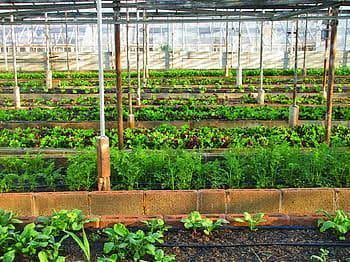
Eating fruits and vegetables is not only good for your health, but it can be good for the environment too! With the climate crisis and inflation at the forefront, it is difficult not to become overwhelmed with how to create change. Currently, food production accounts for 26% of global greenhouse gases, 70% of global freshwater withdrawals are used for agriculture, and half of the world’s habitable land is used for farming (Ritchie, 2022). However, change can start in your local township by shopping for local produce.
Agriculture: Food Miles and Carbon Footprints
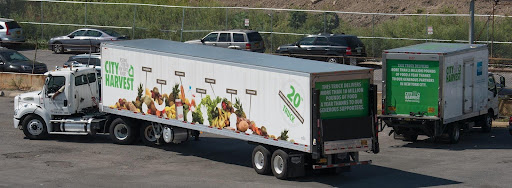
Agricultural production plays a key role in global pollution, not only from land use but also from food miles. Food miles refer to the distance that food travels from its production center to its place of sale. This multistage trip involves the use of trucks, ships, and planes, and majorly contributes to the rising level of greenhouse gas emissions. On average, produce in the United States travels about 1,500 miles before it reaches the dinner table (Corner, 2024). While this trip alone creates a major carbon footprint, energy use from plowing and processing machinery, fertilizer and pesticide use, livestock emissions, and deforestation all combine to make agriculture one of the leading global pollutants and the leading cause of water degradation (vodafoundation.org). Fortunately, according to Iowa State University, purchasing local produce from farmers' markets and local grocery stores has shown positive results in communities regarding energy, water usage, and greenhouse gas emissions.
The Local Difference
Local farms often prioritize eco-friendly production methods, using sustainable practices such as crop rotation to minimize environmental impact. Not only do the practices of local farms benefit the environment, but they also benefit you! In addition to crop rotation, local farms often avoid synthetic fertilizers and pesticides, resulting in organic produce and healthier soil. In their place, natural compost fertilizers are used.
Beneficial practices from local farms also include water conservation techniques such as rainwater harvesting and drip irrigation. This production of healthier and sustainable food provides a compelling argument for purchasing local produce, and this argument is further strengthened when viewed through an economic lens.
Purchasing local produce has been shown to increase economic retention, with studies showing that money spent on local produce tends to stay within the community (Network, 2024). Furthermore, local food systems support local farmers and businesses, creating jobs and boosting employment rates. Increased spending within a local economy can lead to improved schools and infrastructure in said residence.
How to Find Your Local Farmers
One primary reason many people do not buy local produce is a lack of awareness. If you live in Pensacola, Florida, the Palafox Market, which occurs on Sundays from 9 a.m. to 2 p.m., and Bailey's Produce and Nursery are fantastic options for shopping for local produce. If you are located elsewhere, check your city’s local social media page, join a community-supported agriculture program (CSA), or visit the websites https://www.localharvest.org/organic-farms/ and https://www.eatwild.com/products/ for a comprehensive list of farms and ranches near you.
Works Cited
Corner, Each Green. “Food Miles: From Plough to Plate.” Each Green Corner, 9 Apr. 2024, www.eachgreencorner.org/2024/04/09/food-miles-from-plough-to-plate-2/.
Jagdish, Author:, et al. “20 Eco-Friendly Farming Techniques to Achieve Sustainable Agriculture.” Agri Farming, 5 Apr. 2023, www.agrifarming.in/20-eco-friendly-farming-techniques-to-achieve-sustainable-agriculture#goog_rewarded.
Network, Sustainable Agriculture. “Supporting Local Farmers: The Importance of Buying Locally Grown Produce.” SAN, SAN, 31 May 2024, www.sustainableagriculture.eco/post/supporting-local-farmers-the-importance-of-buying-locally-grown-produce.
“Research Shows Significant Environmental Benefits of Local Food Production.” College of Agriculture and Life Sciences, 22 Apr. 2022, www.cals.iastate.edu/news/2022/research-shows-significant-environmental-benefits-local-food-production.
Ritchie, Hannah, et al. “Environmental Impacts of Food Production.” Our World in Data, 2 Dec. 2022, ourworldindata.org/environmental-impacts-of-food.
Vodafoundation.Org, vodafoundation.org/education/types-of-water-pollution/agricultural-pollution/. Accessed 31 Mar. 2025.


