


Recycling Challenges
January 7, 2026 | Lucas Hildebrand
Major Problems In The Recycling Industry
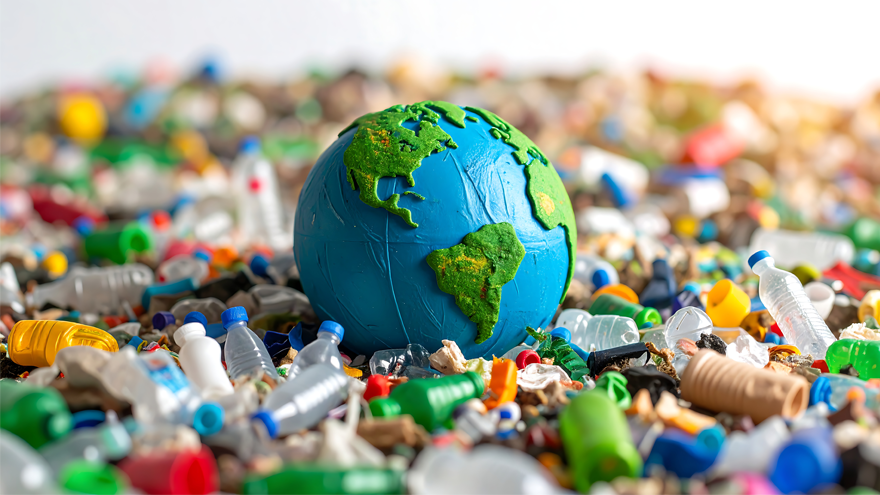
Recycling has been the golden standard of environmental action for a long time. Simply throwing your pizza box in a different bin felt like you were having a positive effect on the environment, but the reality of what happens to recyclables is a lot messier than that. Across the U.S. and much of the world, the recycling industry is buckling under the weight of market shifts, low profit margins, and the fundamental design flaws of our waste systems. Once seen as a self-sustaining solution, recycling is now an industry in crisis, most notably when it comes to plastics.
The Costly Illusion of Plastics
The longest-standing belief around plastic is that it can be reused efficiently and put back into the system. In actuality, only about 5 to 6 percent of plastic waste in the U.S. was recycled in 2021 which is down from around 9 percent in 2018 (Greenpeace USA, 2022;EPA, 2023). Most plastics collected from residential areas (especially bags, foams, and packaging) are either too contaminated, too mixed in material, or too costly to actually process. Recycling these contaminated products costs more than producing new virgin plastic from oil which has consistently remained cheap. There is no profit incentive to recycle plastics for most companies. According to the Global Alliance for Incinerator Alternatives (GAIA) the U.S plastic recycling system is failing due to inadequate infrastructure, but also because most plastic packaging was not designed to be recyclable in the first place (GAIA, 2020). Even when we try to put in effort to have an effect on the environment like separating our waste, much of it ends up incinerated, dumped into a landfill, or exported to countries with less environmental protections.
Collapse of Recycle Trade
For many years the U.S exported a significant amount of its recyclables to countries like China. That abruptly changed in 2018 when the National Sword policy was enacted in China. This act banned the import of most contaminated recycling. Much of what the U.S was exporting overseas was unsorted and therefore China no longer imported any of it. Resulting from this hundreds of U.S towns and cities were left with mounds and mounds of unsellable waste (Brooks et al., 2018). The effects from this act were immediate, Municipalities were forced to choose between paying a higher cost to process their recyclables domestically or to put them into a landfill. Some ended residential recycling programs in their entirety.
Even Non-Plastics Aren’t Safe
Paper, aluminum, and glass were once some of the most readily recyclable materials being circulated, but now they suffer from market saturation and higher processing costs. Glass is heavy and very expensive to ship, paper and cardboard must be clean and sorted to be usable, and even most aluminum packaging will have a plastic liner that must be burned away into the atmosphere before the aluminum can be recycled. The whole process of recycling also takes energy and resources that many local governments do not have the funding for.
The Systematic Problem
The recycling industry’s problems aren't just technical, they are also systematic. The American economy is designed around single-use products and packaging that was not made to be recyclable in the first place. The consumer efforts to properly recycle their products are commendable but they are no match for corporations that prioritizes convenience and profit over sustainability. The solution starts with reducing our consumption of packaged products, designing these products to be more recyclable, and holding producers accountable for the packaging they produce through extended producer responsibility laws. Multiple states including Maine, California, and Oregon have passed extended producer responsibility laws which require companies to help fund the recycling of their products (CalRecycle, 2023). This practice promotes the company to use easier to recycle materials so they don't have to pay as much to recycle them. Judith Enck, a former EPA regional administrator, says that effective extended producer responsibility laws should focus on waste reduction and prohibit harmful forms of recycling like chemical recycling. She states that shifting the financial burden without addressing the root cause of plastic pollution is not sufficient (Beyond Plastics, 2023). Until major systematic changes are implemented, recycling will continue to be a stopgap measure to deal with a world that discards too much and values too little.
References
Brooks, A. L., Wang, S., & Jambeck, J. R. (2018). The Chinese import ban and its impact on global plastic waste trade. Science Advances, 4(6), eaat0131. https://doi.org/10.1126/sciadv.aat0131
Development Elevation. (2020, July 28). All Talk and No Recycling: An Investigation of the U.S. “Chemical Recycling” Industry - GAIA. Retrieved April 1, 2025, from GAIA - website: https://www.no-burn.org/all-talk-and-no-recycling/
Greenpeace. (2022, October 24). Circular Claims Fall Flat Again. Retrieved from Greenpeace USA website: https://www.greenpeace.org/usa/reports/circular-claims-fall-flat-again/
New, L. (2023, January 5). Beyond Plastics - Working To End Single-Use Plastic Pollution. Retrieved April 1, 2025, from Beyond Plastics - Working To End Single-Use Plastic Pollution website: https://www.beyondplastics.org/press-releases/beyond-plastics-new-recycling-policy
Packaging Materials Management. (2018). Retrieved from CalRecycle Home Page website: https://calrecycle.ca.gov/packaging/
US EPA,OLEM,ORCR,RCSD. (2018, September 20). Facts and Figures about Materials, Waste and Recycling | US EPA. Retrieved from US EPA website: https://www.epa.gov/facts-and-figures-about-materials-waste-and-recycling


