


A Discussion on Food Waste
December 8, 2025 | Kendall Gagnon
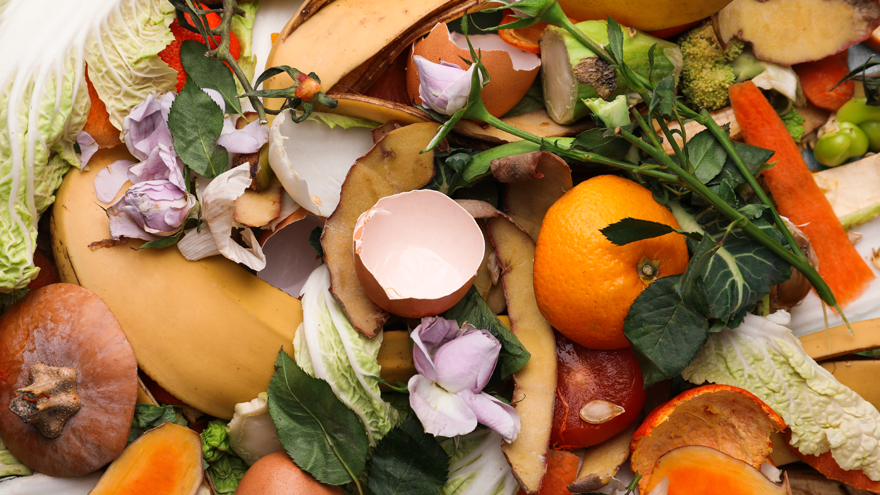
I’d like to raise awareness in this discussion to one of the most challenging issues we’re facing to this day- that issue being food waste. So, what is it? “Food waste is food that is intended for human consumption that is wasted and lost and can occur anywhere throughout the entire supply chain from farm state to harvest to households”. So essentially, food waste consists of food that we have produced for ourselves to eat that simply gets wasted. Let’s first explore the impacts food waste entails, to see why it is such a challenge to begin with!
Firstly, estimates suggest that 30-50% of all food that’s produced for humans to consume is either wasted or lost, with the losses occurring all through the supply chain, from producers to consumers. In the study I’ve pulled from, it’s said that in addition to the behaviors of cooking too much or over-purchasing food, the profile of people who waste large amounts of food are known to have limited awareness of the issue of food waste, have limited kitchen skills, have high-quality standards, and be immune to the financial costs. Demographically, studies show that general groups who tend to discard a lot of food are reportedly families with young children, 18-24 year olds, and those who earn more than $100,000 a year. Fascinating isn’t it?
Now that the impacts have been discussed, let us see where food waste occurs most often, and why! Interestingly, low-income countries experience most food loss during the harvesting, storage, transport, and processing stages. Medium and high-income countries experience waste mostly at retail and consumer levels of the food pathway. I’ll show an image that helps to put the process together, with this flow chart image showing the food flow in a household that results in discard:
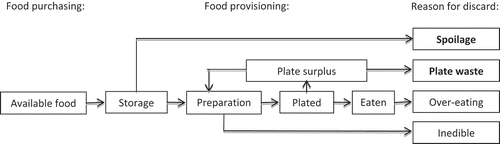
This image is found in: Reframing communications that encourage individuals to reduce food waste
And finally, I’ll present some ways to manage and reduce food waste at the local level, which will then impact an even greater span. By starting at the local level, as many things begin, a successful trend in the reduction of food waste is going to create a massive push as it continues to grow! Studies have reported that the motivations for people to reduce their food waste include the possibilities of saving money, desires to reduce impacts on the natural environment, feeling guilt as food that could’ve been eaten gets thrown away, and of finally food shortages elsewhere on the earth. Different options arise for the disposal of foods, with the landfill being the least attractive option, and “up-cycling” food by feeding it to animals to therefore help produce another food product can be seen as a healthy alternative. And finally, composting is one of the best opportunities for food to be recycled. By attacking this problem head on systematically, raising awareness at the local level, and creating the easiest options for individuals to also be the most environmentally friendly, I believe food waste could be a thing of the past!
References
https://earth.org/what-is-food-waste/
https://www.ucdavis.edu/food/news/why-is-one-third-of-food-wasted-worldwide
https://www.tandfonline.com/doi/full/10.1080/22041451.2016.1209274#abstract


