


Field Schools
General Information
Non-UWF Students: You will have to apply as a non-degree-seeking student before you will be able to register. Please see the information from UWF Admissions regarding this process.
Tuition: Tuition follows the rates summarized on the UWF tuition page.
Accommodations: Living arrangements will be the responsibility of the student. If you are not local to the Pensacola area (or require on-campus housing for any other reason), on-campus housing can be arranged once acceptance into the course is confirmed. For a general idea of costs, see information from UWF Housing and Residence Life.
Food: Students will provide their own water, lunches, and snacks during the course.
Forensic Anthropology Field School (ANT 4523/ANG 5821L, Forensic Field Recovery)
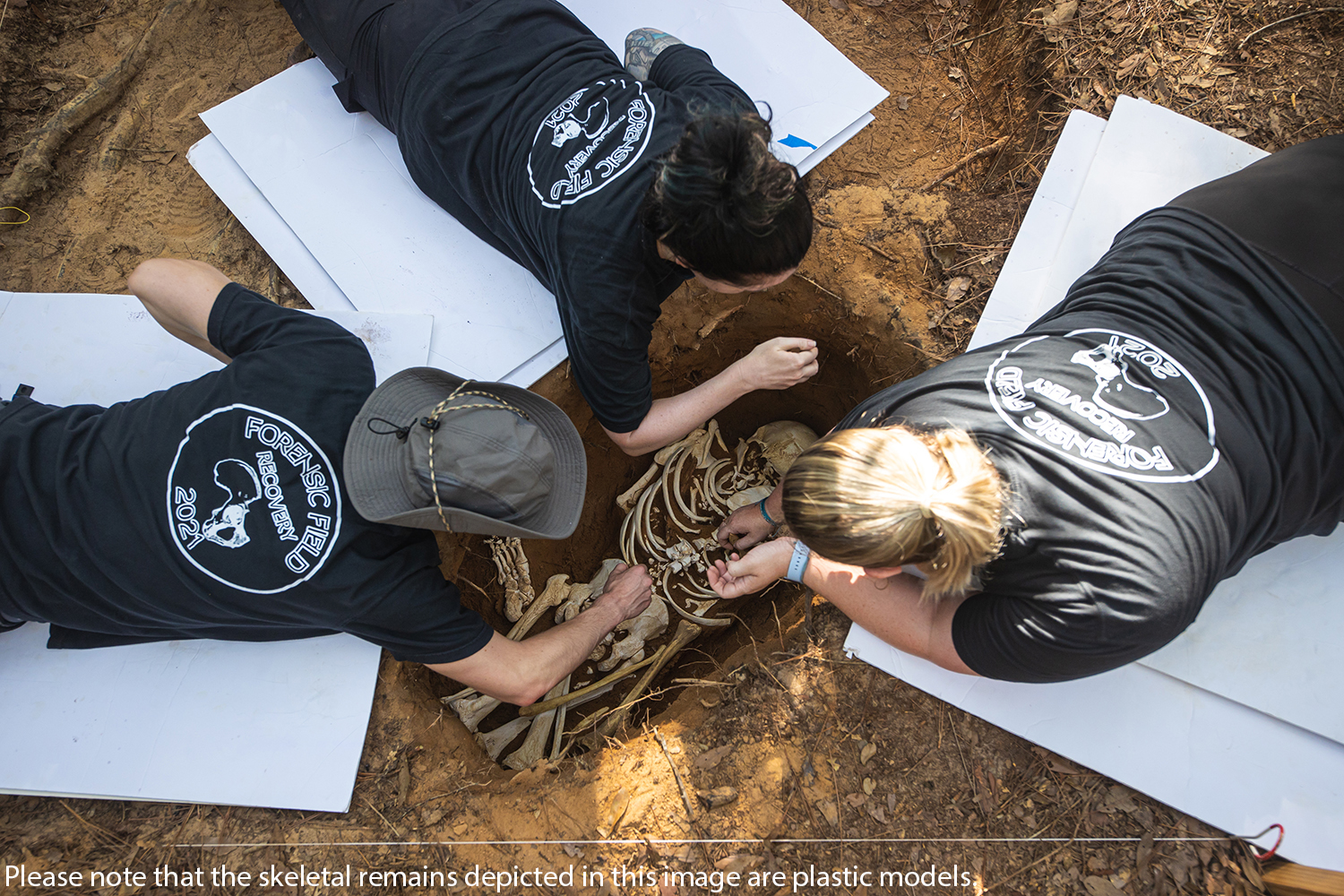
The Forensic Anthropology Field School will be held on the UWF Pensacola campus. The major goal of the 5-week field school is to train students in standard forensic methods for the discovery, documentation, and recovery of human skeletal remains. Students will learn to apply basic methods of archaeological mapping and excavation to simulated forensic scenes involving both surface-scattered and buried skeletal remains. They will also learn to distinguish human from non-human remains and gain experience with explicitly forensic procedures of evidence recovery, such as evidence documentation and collection, site security, and the use of appropriate personal protective equipment (PPE) for different simulated scenarios.
Dates: 18 May-19 June 2026
Schedule: M-F 8-4 pm
Application Deadline: 3 April 2026 (online); You will be told how to register for the specific section when summer registration opens.
Credit: The course is offered for 3 credit hours.
Transportation: All activities will occur on the UWF campus. Transportation to and from the on-campus sites will be the responsibility of the student.
Additional Costs and Other Information: Students will be required to purchase a dig kit (trowel, brushes, tapes, etc.); we will provide a list of items to purchase (estimated cost = $50). There are no prerequisites for the Forensic Anthropology Field School. Experience in forensic anthropology, biological anthropology, human osteology, bioarchaeology, and/or archaeological methods and principles preferred but not essential.
For further information about the Forensic Anthropology Field School, contact Dr. Samantha McCrane smccrane@uwf.edu
Terrestrial, Maritime, and Combined Field Schools 2026 (ANT 4824, ANT4835, ANG 6824)
Terrestrial Archaeological Field School
This year the University of West Florida terrestrial archaeological field school will spend six weeks conducting excavations at the mid-18th-century Apalachee mission village of San Joseph de Escambe, situated in Molino, Florida, just over 20 miles north of Pensacola along the Escambia River. Previous excavations at the site between 2009 and 2015, and more recently in 2025, revealed evidence for Spanish and Apalachee structures including a fortified stockade and a possible round house, and an artifact assemblage blending indigenous and Euro-American material culture within the borderlands between colonial New Spain’s Gulf coast presidio at Pensacola and its French- and British-allied Native neighbors to the west and north. This summer’s work will continue to explore the mission site, as well as overlying traces of an adjacent Reconstruction-era steam-powered sawmill just below the bluff. For more information, see the web page for the mission.
Dates: 18 May-26 June 2026
Credit: The course is offered for 6 credit hours.
Maritime & Combined Field Schools
Dates: 18 May-26 June 2026
Credit: The course is offered for 6 credit hours.
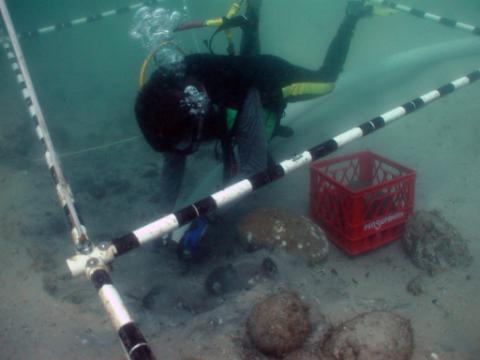
Additional Costs and Other Information: Students must bring their own mask, fins, and snorkel. Other personal dive gear (such as regulators) is recommended, but will be available through the Marine Research Center as needed.