


Air Quality Near Airports
February 4, 2026 | Zayden Thompson
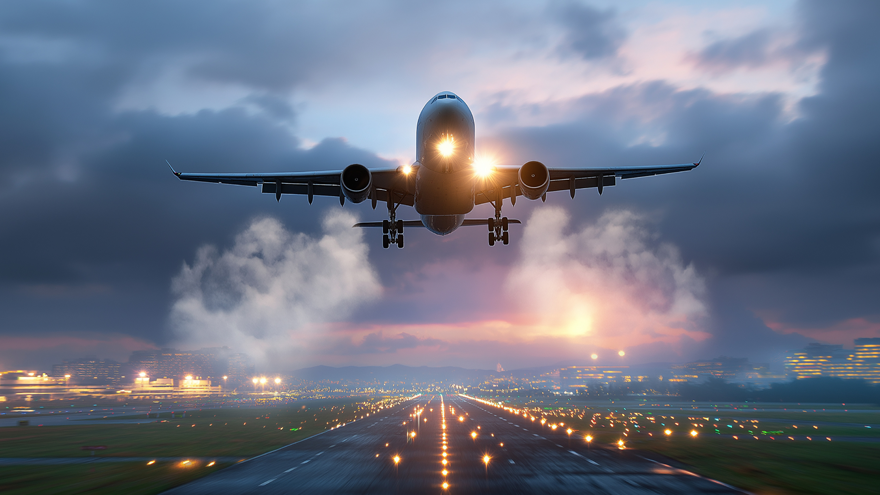
Air quality near airports can be affected heavily by aircraft emissions like particulate matter(PM), nitrogen oxide (NOx), and many other pollutants. These harmful pollutants cause many internal failures to many people mainly those like cardiovascular and respiratory issues for residents and workers.
When discussing the importance of aircraft emissions, the primary source of any air pollution near airports is the exhaust from the aircraft itself. This primarily takes place during the takeoff and landing of an aircraft. This can include commercial airline jets, private jets, Cessna planes, fighter jets, helicopters, and others. Commercial airports however, can adversely contribute to the negative impacts to the vicinity of these airports, and to the millions living near them (Clark, A. I., McIntyre, A. E., Perry, R., & Lester, J. N. (1983). Air quality measurement in the vicinity of airports. Environmental Pollution Series B Chemical and Physical, 6(4), 245–261).
On-ground moving vehicles and equipment used for service towards an aircraft also contribute to emissions. Aircraft, vehicles, and equipment all cause pollution through the combustion of fossil fuels. This then goes into it releasing pollutants such as carbon dioxide, nitrogen oxides, and particulate matter. These all not only harm the environments near airports, but it affects the environment air quality locally and globally (Hudda, N., Durant, L. W., Fruin, S. A., & Durant, J. L. (2020). Impacts of aviation emissions on Near-Airport residential air Quality. Environmental Science & Technology, 54(14), 8580–8588.)
The main pollutants caused by this are carbon dioxide which is a major greenhouse gas that contributes not only to this, but as well as to climate change. Nitrogen oxides add in smog and acid rain, which can then form ozone when reached ground level. Furthermore, particulate matter is found to be tiny particles that can easily be inhaled and cause severe respiratory problems. Soot lastly is a form of particulate matter that can go further into impacting climate change and different heat issues. These are just a few of the many components that each contribute to the effects caused to air quality.
These issues all can cause what is known as cardiovascular issues and severe pain. Pollutants such as particulate matter all can impact this illness by causing inflammation, increasing blood pressure, and even triggering heart attacks and strokes. This is because tiny particles, PM2.5, can dig deep in the lungs and bloodstream of humans (Zhu, Y., Fanning, E., Yu, R. C., Zhang, Q., & Froines, J. R. (2011). Aircraft emissions and local air quality impacts from takeoff activities at a large International Airport. Atmospheric Environment, 45(36), 6526–6533). This is what causes the inflammation and damage of blood vessels. Inflammation is caused by the air pollution that is being triggered down the body, mainly in the heart and blood vessels, which can then develop into cardiovascular disease (Clark, A. I., McIntyre, A. E., Perry, R., & Lester, J. N. (1983). Air quality measurement in the vicinity of airports. Environmental Pollution Series B Chemical and Physical, 6(4), 245–261).
To add, many prefer to not move near airports due to the noise levels throughout the day on a daily basis. Many have complained on a global scale of the noise and how it disturbs many sleep schedules, increases in the amounts of stress, impaired cognition within children, and having a higher risk of heart disease and higher blood pressure levels. Also, depending on which section of the airport you’re living by can help determine how much damage can be caused from air pollutants. The closer you are to any airport, the runway and flight path, you are more likely to experience some kind of noise pollution. Planes that are veering off and circling around can also cause more pollution being caused and dropped into the air.
As many move near airports, it’s important to consider different components and factors such as which way is your home facing the runway. It’s also very important to know their flight paths (takeoffs and landings). As well as knowing your location relative to these airport components when searching for any future home (Hudda, N., Durant, L. W., Fruin, S. A., & Durant, J. L. (2020). Impacts of aviation emissions on Near-Airport residential air Quality. Environmental Science & Technology, 54(14), 8580–8588.) These all can be easily avoided with simple apps that can show you your home airports departing and arriving board all at the same time. These are very important to take into consideration because many have been reported regretting buying homes near the airport due to the non-stop noise from aircraft engines. However, many have noticed a pattern of when moving to a different and quieter city, noise had suddenly increased. By promoting sustainable aviation, there is encouragement for using more clean and safe aviation fuels, and by enforcing electric and hybrid aircraft to be utilized during shorter flights. We are also in a very high technology stage within society. Investing in technologies that can do nothing but uplift aircraft fuel efficiency will not only fight back on this issue but also reduce the emission per passenger-kilometer. This will overall be a start and foundation to stop the mass air quality caused by pollution and different pollutants. Promoting these will only cause air quality to be on an uprise in a positive way with no impacts to the quality of life and humans.
Air quality near airports has been a noticeable problem for many years. Many pollutants have elevated to higher levels making air quality near airports less safe and durable for residents and workers. The way to combat such an issue is by reducing emissions, improving air quality, and only promoting sustainable activities such as public transportation, investing in safe and clean fossil fuels, and finally setting more strict emission standards.
Conclusion
Having planes be one of the main ways of traveling, it is crucially important to find a way to make this form of traveling safe for our environment. This must be confronted with a grain of salt due to this issue being one that’s able to be fixed without harming anyone. Plane engines are huge and emit greenhouse gases such as CO2 into the atmosphere. To add, aviation contributes to about 2.5% of global emission, but the impact on global warming is calculated to be around 4% because of other factors like non-CO2 emissions. Aviation industries are currently developing technologies to reduce emissions, which will include more fuel-efficient engines which will lead us into the right direction. When discussing the electric and hybrid aircraft needed and operational procedures, this improvement can reduce emissions greatly. These must be taken due to these pollutants causing severe internal struggles, and causing our environment to be damaged in extremely harmful ways.
References
Zhu, Y., Fanning, E., Yu, R. C., Zhang, Q., & Froines, J. R. (2011). Aircraft emissions and local air quality impacts from takeoff activities at a large International Airport. Atmospheric Environment, 45(36), 6526–6533.
Hudda, N., Durant, L. W., Fruin, S. A., & Durant, J. L. (2020). Impacts of aviation emissions on Near-Airport residential air Quality. Environmental Science & Technology, 54(14), 8580–8588.
Clark, A. I., McIntyre, A. E., Perry, R., & Lester, J. N. (1983). Air quality measurement in the vicinity of airports. Environmental Pollution Series B Chemical and Physical, 6(4), 245–261.


