


Past Presidents
Presidents of the University of West Florida from 1964 through 2025.
Dr. Martha D. Saunders
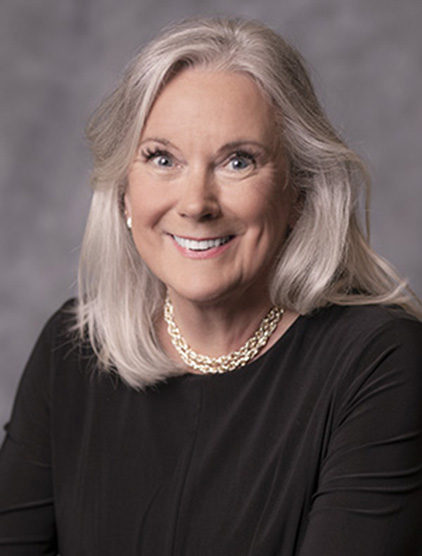
2016-2025
Martha Dunagin Saunders served as the sixth president of the University of West Florida.
In her 30-plus years in higher education, Dr. Saunders has held academic and leadership roles at universities in Florida, Georgia, Wisconsin and Mississippi.
Her area of academic expertise is in public relations and crisis communication for which she has won numerous awards, including two coveted Silver Anvils from the Public Relations Society of America.
Under her leadership, the University of West Florida transformed into a first-choice institution.
Dr. Saunders was given the title of President Emeritus on June 12, 2025, by the UWF Board of Trustees with an effective date of July 14, 2025. See Resolution 2025.1 for more details.
Dr. Judith Bense
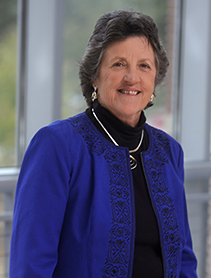
2008-2016
Dr. Judith Bense became the fifth president of the University of West Florida on July 1, 2008, after serving at the University for 28 years. President Bense focused on growth, visibility, enhancing the student “collegiate” experience, and partnerships with the goal of making UWF a first-choice university. She built a solid network of community partners, identified regional workforce needs, increased enrollment, and strengthened academic programs so that students are prepared for future leadership.
Bense was given the title of President Emeritus on December 8, 2016, by the UWF Board of Trustees with an effective date of January 1, 2017. See Resolution 2016.6 for more details.
Dr. John C. Cavanaugh
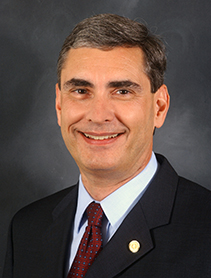
2002-2008
Dr. John C. Cavanaugh became UWF’s fourth president and the first named by the Board of Trustees on July 15, 2002. During his six years at UWF, the Board of Trustees adopted a new campus master plan, the Florida Legislature approved UWF’s four-year nursing program, the University launched a degree in hospitality, recreation and resort management, graduate classes in historic preservation began in Historic Pensacola Village, and the UWF baseball field, renamed Pelican Park, became host to the professional team, Pensacola Pelicans. Additionally, in 2004, Argo Hall student residence and the International Center opened, the campus went wireless, online teaching resources were consolidated under the Academic Technology Center and new degrees in public history and environmental science were launched.
Also under Cavanaugh’s leadership, UWF survived Hurricane Ivan in 2004 and Hurricane Dennis in 2005 and became a national model for disaster planning and preparedness.
Other accomplishments during Cavanaugh’s presidency included UWF being named host of the Florida Public Archaeology Network; the opening of the Health, Leisure and Sports Facility; University locations in Okaloosa and Walton Counties were renamed the UWF Emerald Coast; the UWF music department was named an All-Steinway School; and UWF celebrated its 40th anniversary.
See UWF Board of Trustees Resolution 2008.1 for an In Recognition of Distinguished Service of President Cavanaugh.
Dr. Morris Leon Marx
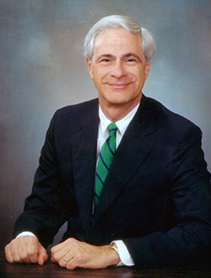
1988-2002
Dr. Morris Leon Marx, the third UWF president, was inaugurated in September 1988. During Marx’s tenure, Congress approved the 136-acre land swap to create the permanent OWC-UWF joint Fort Walton Beach campus, which then opened in 1992. Additionally, the education specialist program began; the Center for Fine and Performing Arts, College of Education Complex, student services building, John G. Martin Hall and John C. Pace Jr. Hall student residence, psychology building and University Village apartments opened; UWF joined NCAA Division II; John C. Pace Jr. left UWF his $12 million estate; and the Foundation capital campaign netted $32 million. Other accomplishments during Marx’s presidency included the Argonauts capturing the 1993 NAIA softball national championship, the NCAA Division II national tennis doubles title in 1996, the NCAA Division II men’s golf individual national championship in 1998, and the University’s first NCAA Division II team national championship by the men’s golf team in 2001.
Also notable, in 1997, the University conferred its first doctoral degrees in education, purchased additional land bringing the size of the Pensacola campus to 1,600-acres, and the Archaeology Institute raised the anchor from the Tristan de Luna ship in Pensacola Bay. In 2000 and 2001, respectively, students from neighboring Alabama counties became eligible for in-state tuition rates and West Florida Historic Preservation Inc., with its 22 historic properties in downtown Pensacola, became a direct support organization of UWF.
Marx was given the title of President Emeritus on June 7, 2002, by the UWF Board of Trustees with an effective date of July 14, 2002. See Resolution 2002.6 for more details.
Dr. James Arthur Robinson
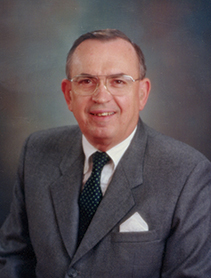
1974-1988
Dr. James Arthur Robinson, the second UWF president, took the helm in December 1974. During his 14 years as president, the University experienced several significant milestones, including the establishment of the campus art gallery, Edward Ball Nature Trail, Small Business Development Center, aquatic center, WUWF-FM, Argonaut baseball and softball teams, 400-meter track and computer center. Under Robinson’s leadership, the University’s colleges were restructured to traditional arts and sciences, business and education in 1979; UWF switched to the semester system in 1981; and the first freshman class was admitted in 1983.
Dr. Harold Bryan Crosby
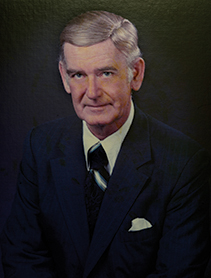
1964-1974
Dr. Harold Bryan Crosby was selected as the first UWF president and assumed office in July 1964. In his first year, Escambia County purchased 13 parcels of land for $1.2 million to form the 1,000-acre campus, ground was broken for the first UWF buildings, the University adopted the Nautilus shell as its official emblem, the UWF Foundation was chartered, and the first classes were offered in the name of the University. Other accomplishments during Crosby’s tenure included selection of the Argonaut as the UWF mascot; the University library being named for John C. Pace; University undergraduate programs being accredited by SACS; establishment of the UWF Fort Walton Beach Center; and the first distinguished teaching awards being presented.

