UWF is one of only a few institutions in the U.S. offering a B.S. in Marine Biology. You will become immersed in the environment you are studying on our campus with 300 acres of marshes and wetlands and 150 acres on the Gulf of Mexico. Our program prepares you for a career in environmental regulation, conservation, fisheries, aquaculture and more.
Why Study Marine Biology at UWF?
Very few universities in the United States offer a dedicated Bachelor of Science in Marine Biology. UWF is one of only three programs in the state of Florida – and one of a small handful in the entire country. What makes UWF distinctive is not just the degree itself but the environment in which you earn it. The Gulf of Mexico is not a field trip destination here. It is your classroom.
The main campus borders 300 acres of estuarine marshes and wetlands, and the Gulf Islands Research and Education Center on Santa Rosa Island puts students directly into Gulf Coast beach, salt marsh, tidal flat, and seagrass ecosystems. Students in the marine biology program work alongside research-active faculty publishing in international journals, conducting fieldwork from the Florida Panhandle to Antarctic fjords, and addressing pressing environmental questions including microplastic contamination in coastal invertebrates, the biodiversity of marine species in rapidly changing ocean environments, and the population dynamics of wetland-dependent wildlife critical to Everglades restoration.
Students drawn to the health sciences or broader biological questions can also explore our Bachelor of Science in Biomedical Sciences or our flexible Bachelor of Science in Biology, which together give the UWF Department of Biology a scope that is genuinely rare among regional universities.
What You Will Learn
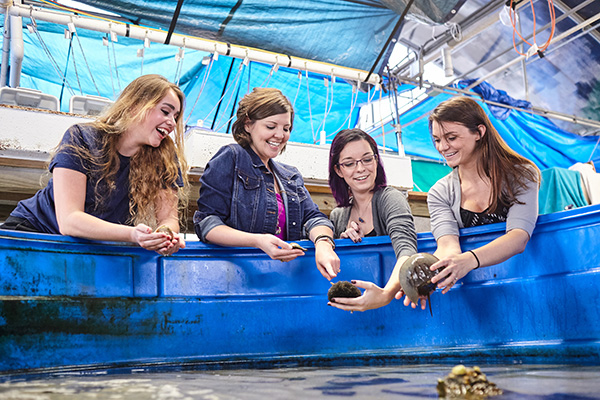
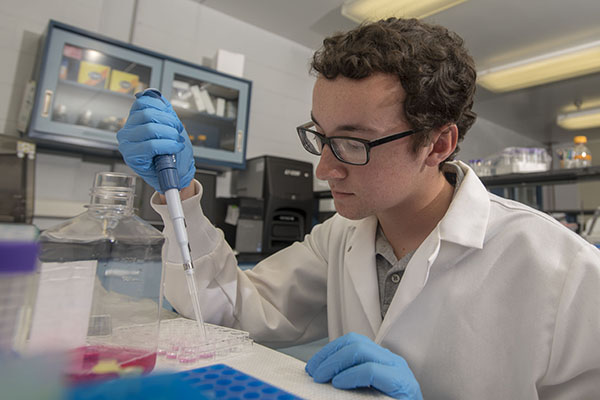
Your coursework builds on a rigorous core of biological sciences including genetics, ecology, cell biology, and organismal biology, before moving into electives that emphasize the theoretical and applied dimensions of aquatic and marine systems. You will develop skills in field sampling, specimen collection and identification, laboratory analysis, and scientific communication.
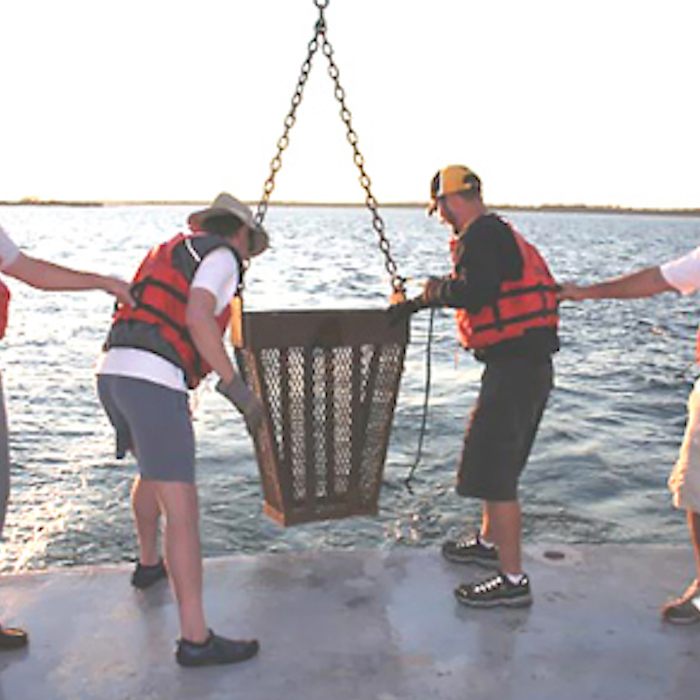
You will have access to a fleet of research vessels, collection gear, and field and laboratory instrumentation through UWF's Marine Research Center. Field studies extend throughout Florida and beyond, and summer research experiences have taken UWF students to Indonesia, Costa Rica, Honduras, and the Florida Keys and Dry Tortugas. Whether you work with a faculty mentor on an active funded research project, conduct a directed independent study, or pursue an Honors thesis, you will graduate with the kind of real-world experience that sets you apart.
Qualified students can complete up to 12 credit hours of graduate coursework while finishing their undergraduate degree, accelerating the path to the Biology M.S. without adding time to their undergraduate studies. Students interested in the Accelerated Marine Biology B.S. to Biology M.S. option should meet with both their undergraduate and graduate advisors early to develop a coordinated plan. Marine biology is primarily a face-to-face program, reflecting the hands-on and field-based nature of the discipline.
UWF offers classes through various delivery methods, including face-to-face, hybrid, and online. Though UWF makes every effort to provide on-campus classes in face-to-face programs, there is a possibility that some classes will have limited availability and may be offered online only. For more information, review the modes of delivery and instructional methods.