


From Interdisciplinary Humanities to Curatorial Excellence at the Pensacola Museum of Art
September 16, 2025 | By Aimee Farmer, Student Intern, Department of English | Edited by Karen Tibbals, CASSH Communications Coordinator
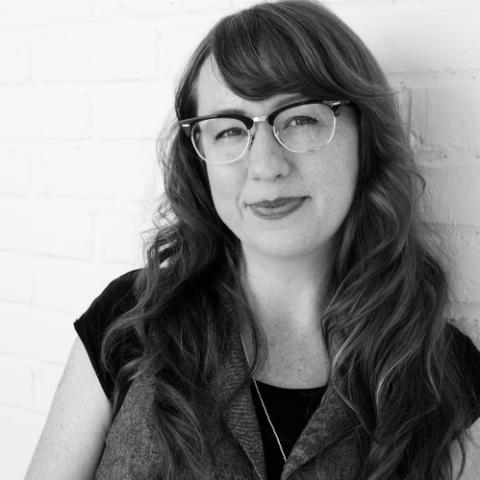
Felicia Gail’s journey from a student at the University of West Florida (UWF) to a respected curator at the Pensacola Museum of Art is a testament to the power of interdisciplinary learning and the impact of a creative, supportive community.
A graduate of UWF’s Class of 2004, Gail initially pursued a major in International Studies. However, after some time away from school to travel and explore different parts of the U.S., including Chicago, Boulder, and the Pacific Northwest, she returned to UWF with a new vision. Gail changed her focus to Interdisciplinary Humanities, combining English, Philosophy, and Communications. This shift marked the beginning of a path that would eventually lead her to a successful career in art curation.
My time at UWF was instrumental. I had so many formative experiences with professors who deeply impacted me. They shaped my understanding of how to think critically, convey ideas, and, most importantly, how to contextualize what it means to be human in a complex world. - Felicia Gail, Museum Curator
After graduating in 2004, Gail continued her studies and earned a second BA in Art History in 2011. Her journey took her from Pensacola to Missoula, Montana, and Minneapolis, where she worked in the newspaper industry and studied at the Minneapolis College of Art and Design. It wasn’t until returning to Pensacola in late 2009 that she reconnected with UWF and joined the art community at UWF's historic Pensacola Museum of Art.
It was at this museum that Gail’s curatorial career truly flourished. She served as the Curator of Exhibitions from 2017 to 2019, where she worked on many notable projects. One exhibition that stands out to her is Hustle, a collaborative project that brought together UWF art students, faculty, and community artists. This exhibition, she says, was a defining moment in her career. “It changed my life and reinforced my belief in the power of community collaboration,” Gail says.
As Curator, Gail collaborated with a wide range of artists and UWF professors, including Joseph Herring, chair of the Department of Art and Design; Jamin Wells, former associate professor of History and Philosophy; Amy Ruddick, former faculty; Valerie George, Professor, Department of Art and Design; Carrie Fonder, Associate Professor, Department of Art and Design; Robin Blyn, Professor, Department of English; and Thomas Asmuth, Professor, Department of Art and Design. She credits them with giving her a deeper understanding of how art can connect the university to the Pensacola community, both historically and artistically. Gail’s work helped strengthen these connections, providing both a platform for artists and an avenue for community engagement.
Throughout her career, Gail’s education at UWF remained a touchstone. She credits the faculty at UWF with fostering a creative environment that encouraged risk-taking, open-mindedness, and interdisciplinary exploration.
Every day, I use something I learned from my time at UWF. It’s not just the technical skills I gained; it’s the holistic perspective on the world that truly shaped my career. - Felicia Gail, Museum Curator
In her role at the Museum of Design Atlanta, Gail continues to apply the lessons she learned in Pensacola. As a registrar and freelance worker, she stewards art collections, ensuring that future generations can experience and learn from them. Her understanding of the intersection between design, art, and social responsibility allows her to empower others through creative solutions to complex problems.
Gail’s journey reflects the power of a liberal arts education and the importance of staying open to new experiences. From her time at UWF to her role as an educator and curator, Gail has always emphasized the importance of interdisciplinary work and creative problem-solving. She encourages current students to embrace the fluidity of their paths. “You can be whatever you want to be,” she advises. “Take it all in. Be patient with yourself. Don’t be afraid to change your mind. And, most importantly, use everything you learn—whether it’s from a critique of a photograph or a lesson on history—because it will all come into play in ways you never expect.”
Her advice to current and prospective students resonates across disciplines: “Learn the history of your subject. Understand the spaces you’ve inherited. Be kind, even when kindness isn’t deserved. Use everything. Take as long as you like, but don’t take too long. Art includes everyone.”
As for Gail, she continues to return to Pensacola, where she maintains strong ties with the creative community that shaped her. She remains deeply connected to UWF’s vibrant network of artists, writers, and thinkers, a place where she finds both inspiration and a sense of home.
To learn more about Interdisciplinary Social Sciences, Art History, or Interdisciplinary Humanities programs at UWF and how they can shape your future, visit UWF’s College of Arts, Social Sciences, and Humanities.


