


William D. Smart Seminars
In 2005, the William D. Smart Seminar Series in Chemistry was established at the University of West Florida thanks to an endowment gift of $100,000 from William and Mary Smart of Pensacola. The endowment allows the Department of Chemistry to host distinguished scientists to campus to present and discuss cutting-edge scientific research.
Smart Seminars in Chemistry
In 2005, the William D. Smart Seminar Series in Chemistry was established at the University of West Florida thanks to an endowment gift of $100,000 from William and Mary Smart of Pensacola. The endowment allows the Department of Chemistry to host distinguished scientists on campus to present and discuss cutting-edge scientific research. In the last decade, we have hosted some of the most prominent chemists in the world. This list includes Sir Harry Kroto (1996 Nobel Prize in chemistry) and Sir Fraser Stoddart (2016 Nobel Prize in chemistry).
Dr. Stephen L. Buchwald
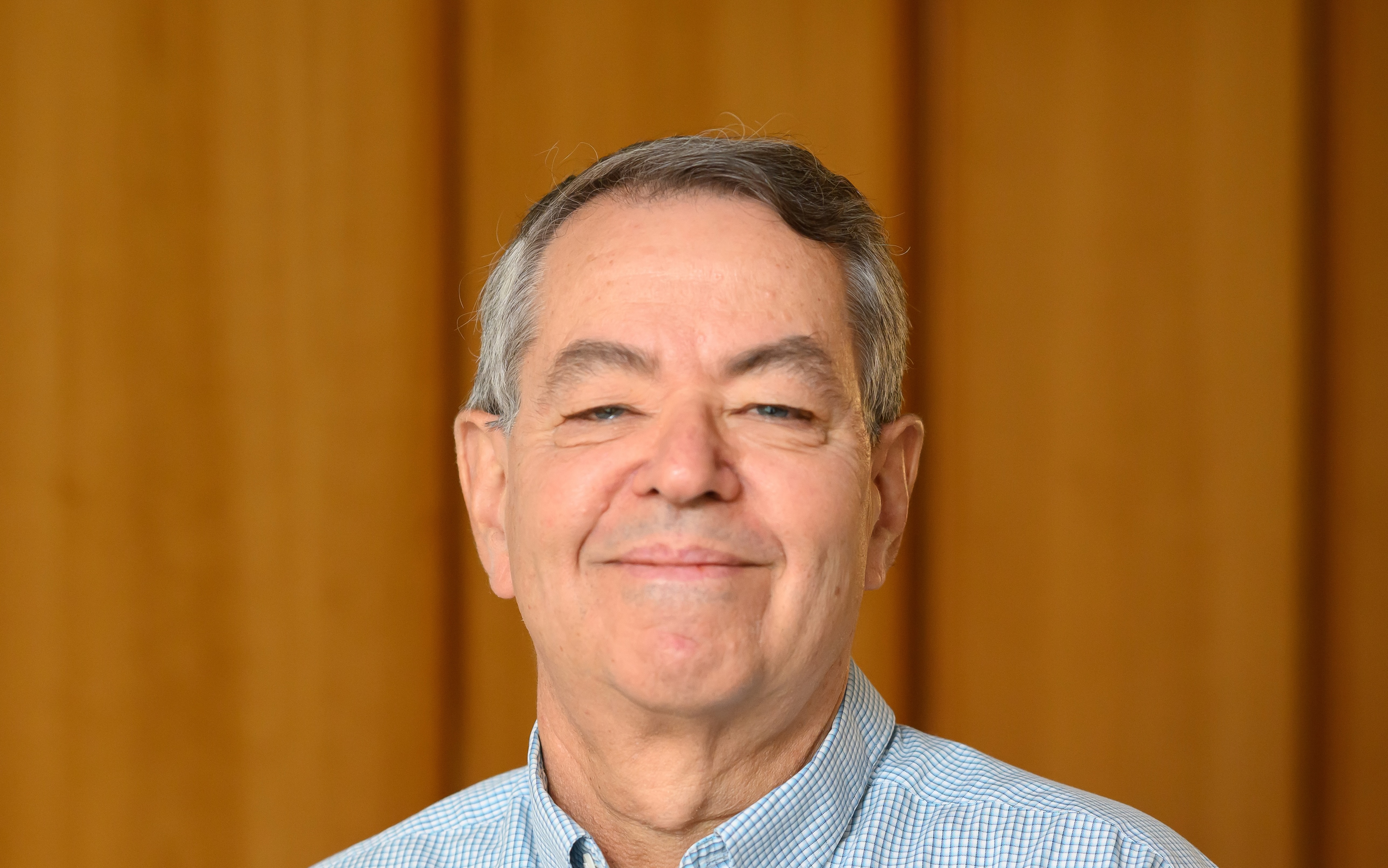
Dr. Stephen L. Buchwald, born in 1955 in Bloomington, Indiana, is a globally recognized leader in synthetic organic and organometallic chemistry. He earned his Sc.B. from Brown University in 1977 and completed his Ph.D. at Harvard University in 1982 as a National Science Foundation Predoctoral Fellow. He went on to serve as a Myron A. Bantrell Postdoctoral Fellow at the California Institute of Technology before joining the faculty at the Massachusetts Institute of Technology in 1984.
At MIT, Dr. Buchwald was promoted to associate professor in 1989, professor in 1993, and named the Camille Dreyfus Professor of Chemistry in 1997. He also served in departmental leadership as Associate Head of the Chemistry Department. Throughout his career, he has received numerous prestigious honors, including the ACS Award in Organometallic Chemistry (2000), the ACS Award for Creative Work in Synthetic Organic Chemistry (2006), the Arthur C. Cope Award (2013), and the Wolf Prize in Chemistry (2019).
More recent honors include the BBVA Frontiers of Knowledge Award in Basic Sciences (2015), the Nagoya Gold Medal (2017), the Tetrahedron Prize (2018), the Yamada Koga Prize (awarded in 2020 and received in 2023), and the Paul Karrer Gold Medal from the University of Zürich (2022). Dr. Buchwald is a Fellow of the American Academy of Arts and Sciences and a member of the National Academy of Sciences.
His decades-long impact on chemical synthesis, coupled with his leadership and mentorship, make Dr. Buchwald an exceptional choice for this year’s Smart Seminar Series speaker.
SMART Lecture with Stephen Buchwald:
Tuesday, April 14, at 3:00 pm in Building 58A, Room 101.
Copper Catalysts for Carbon-Heteroatom Bond Formation
Tuesday, April 14, at 6:00 pm at the Institute for Human and Machine Cognition,
40 S Alcaniz St, Pensacola, FL
Pd-catalyzed Carbon-Nitrogen Coupling Reactions: How Did We get Here and Why do We Care?
| Year | Speaker and Topic |
|---|---|
| 2025 | Dr. Timothy M. Swager, Massachusetts Institute of Technology |
| 2025 | Dr. Lucian Boldea, Honeywell Industrial Automation |
| 2024 | Professor Steven P. Nolan, Ghent University |
| 2023 | Dr. Angela K. Wilson, Michigan State University |
| 2023 | Dr. Karen L. Wooley, Texas A&M University (Polymer) |
| 2019 | Dr. Jeffrey S. Moore, University of Illinois Urbana-Champaign (Materials) |
| 2018 | Dr. Richard D. McCollough, Harvard University (Materials) |
| 2017 | Dr. Monica Olvera de la Cruz, Northwestern University (Inorganic) |
| 2016 | Dr. John Hartwig, University of California, Berkeley (Organic) |
| 2015 | Dr. Anthony J. Ryan, OBE, University of Sheffield (Polymers) |
| 2014 | Dr. Geraldine L. Richmond, University of Oregon (Organic) |
| 2011 | Dr. Ken Raymond, University of California (Inorganic) |
| 2011 | Dr. Michael Summers, University of Maryland (Organic) |
| 2010 | Dr. Daniel Nocera, Massachusetts Institute of Technology (Materials) |
| 2009 | Sir Fraser Stoddart, Northwestern University (Inorganic) |
| 2007 | Sir Harry Kroto, Florida State University (Inorganic) |