


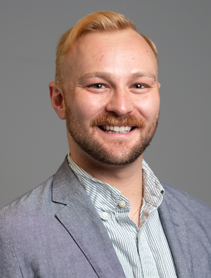
Dr. Ryan A. Allen
- Position: Assistant Professor
- Department: Chemistry
- Office Location: Building 58, Room 008
- rallen@uwf.edu
- Campus: 850.474.2739
- Curriculum Vitae (CV)
Biography
Dr. Ryan A. Allen earned his Bachelor of Science from Villanova University, majoring in Chemistry and Biochemistry and minoring in Spanish Literature and Language. During his undergraduate studies, he began research with Dr. Jennifer Palenchar on the beta-hydroxybutyrate dehydrogenase enzyme in Trypanosoma parasites before switching to medicinal chemistry research with Dr. Kevin Minbiole. In the Minbiole Lab, he synthesized a library of novel surface disinfectants known as quaternary ammonium compounds (QACs) that could degrade in water, thereby evading resistance selection from microbes in hospital environments.
After Villanova, Dr. Allen completed his PhD in Chemistry at Emory University, where his doctoral work focused on complementary approaches to combating antibacterial resistance. Through synthesis of natural products and their derivatives with antibacterial properties, he explored their mechanisms of action and how they could complement existing antibiotics to evade cross-resistance. He also continued his work with QACs through ongoing collaboration with the Minbiole Lab at Villanova University to measure the efficacy of commercially available surface disinfectants, such as those in disinfecting wipes, against multidrug-resistant clinical isolates of Pseudomonas aeruginosa and Acinetobacter baumannii. The antibacterial activities of these commercially available QACs were compared to the “best-in-class” QACs and newly synthesized quaternary phosphonium compounds (QPCs) developed by the Minbiole Lab, demonstrating decreased efficacy of commercially available QACs and the superior antibacterial activities of QPCs.
Dr. Allen joined Dr. Amit Reddi's lab at the Georgia Institute of Technology after earning a PhD. Herein, he developed a novel hemoproteomics approach to detect heme-binding proteins in live cells. This work has motivated Dr. Allen’s independent career, in which he will use proteomic approaches to understand how tetrapyrroles such as heme and chlorophyll are trafficked and stored, and how they influence cell signaling pathways, to develop novel therapies.
Degrees & Institutions
- B.S. Chemistry and Biochemistry - Villanova University
- PhD Chemistry - Emory University
Research
Proteomic and Computational Methods to Understand and Inhibit Heme Trafficking and Utilization in Pathogenic Fungi:
During an infection, the human body limits the necessary nutrients available to invading pathogens, such as iron, via nutritional immunity. Pathogenic fungi, such as Candida albicans, have developed mechanisms to evade nutritional immunity and harvest the iron from red blood cells known as heme. By secreting proteins capable of cell lysis, they release hemoglobin from red blood cells, capture the heme using extracellular hemophores, and import it with ferric reductase-like proteins (Frp1/2) for cellular use. Heme can also serve as a trigger for these pathogens to switch from a unicellular morphology to a hyphal morphology, which enables resistance to the host immune system and antifungal treatment.
To better understand how heme is capable of causing a morphological switch, as well as to identify novel targets for antifungal development, my lab will use the hemoproteomics approach I developed during my postdoctoral career to probe the hemoproteome of these pathogens. In addition to this foundational biochemical work, we will also computationally model the protein-protein interactions of Frp proteins and their cognate hemophores, as well as the heme-binding sites in Frp proteins, towards the development of novel antifungal agents that stunt fungal growth via inhibition of heme iron uptake.
Current Courses
- CHM 4610L - Inorganic Synthesis Lab
- CHM 2211L - Organic Chemistry II Lab