


Ayla Green: From Orchestra to Civics Classroom
February 27, 2026 | By River Fundock, Student Intern, Department of Communication | Edited by Karen Tibbals, CASSH Communications Coordinator
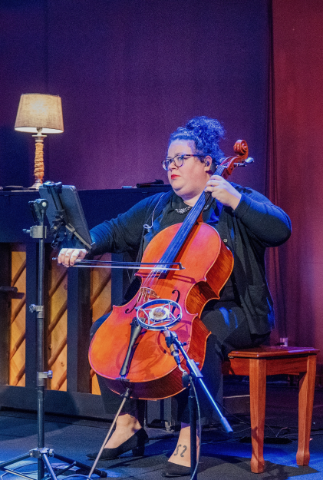
Ayla Green’s journey through the University of West Florida’s College of Arts, Social Sciences, and Humanities reflects the power of interdisciplinary learning and adaptability. Today, as a seventh-grade civics teacher, she draws daily on the research, analytical, and communication skills she developed at UWF to prepare the next generation of engaged citizens.
Green earned a Bachelor of Arts in History with a minor in Cello Performance in 2015 and completed her Master of Arts in Political Science in 2017. As a graduate student, she worked alongside Dr. David Ramsey in the Reubin O’D. Askew Department of Government as a research assistant on the Taney B. Rogers Letters Project and served as a teaching assistant. In her final semester, she became Data Lab Coordinator, supporting students and faculty in synchronous online learning. Her graduate research focused on elections and the role of social media, with a specialization in American politics and research methodology. These experiences strengthened her understanding of political systems and digital communication in an evolving civic landscape.
Green’s academic path reflects both curiosity and resilience. She began at UWF as a cello performance major, thriving in orchestra and chamber groups. Over time, she chose to broaden her academic focus alongside her love of music. After taking time to reflect on her goals, she returned to UWF and immersed herself in general education coursework, where she discovered a passion for history.
She enrolled in the Pre-Law track for History, engaging in coursework across history, government, and criminal justice. After extending her studies through a study abroad program in Europe focused on World War II and the concept of memory, she returned prepared to adapt her academic plan and complete her degree. That flexibility, paired with intellectual rigor, became a defining strength.
During her graduate studies, Dr. Ramsey’s Seminar on Political Thought left a lasting impression.
The Seminar on Political Thought challenged me intellectually, but what stands out most was how it reinforced the idea that education isn’t just about academic achievement. It’s about resilience, perseverance, and the people who support us along the way. - Ayla Green
When she faced personal challenges during that semester, Dr. Ramsey reached out with encouragement. “He didn’t have to do that, but he did. That small gesture carried me through that semester and has continued to inspire me in times of self-doubt.”
Green also credits her mentors in the Department of Music, Dr. Leonid Yanovskiy and Dr. Boyan Bonev, for shaping her leadership and discipline. Lessons learned in ensemble performance, such as collaboration, preparation, refinement, and collective harmony, continue to influence how she leads her classroom and works within her school community.
Her involvement in Runge Strings, Pi Sigma Alpha, and Phi Alpha Theta deepened her engagement across disciplines. These organizations strengthened her research skills, expanded her professional network, and reinforced her passion for government, law, and civic engagement.
“Being involved in these honor societies gave me the opportunity to participate in discussions, research, and networking events that reinforced my passion for government, law, and civic engagement,” she says.
Today, Green’s CASSH education translates directly into measurable impact.
In my current role as a 7th-grade civics teacher, 87% of my students are performing on or above grade level, a testament to the strategies and skills I developed during my time at UWF. - Ayla Green
Her background in history and political science allows her to guide students through complex discussions about government, law, and civic responsibility with confidence and clarity. The analytical rigor, communication skills, and adaptability she developed at UWF prepared her not only for graduate study and professional roles but for meaningful community impact.
Her advice to current students reflects the enduring value of the humanities:
“The ability to read critically, write persuasively, analyze deeply, interpret complex information, and think strategically is not just relevant. It’s highly transferable and coveted across countless industries. Embrace the challenge. Be curious. Keep asking questions. And most importantly, never underestimate the power of the knowledge and skills you are gaining, because the world needs them now more than ever.”


