


When Digital Companions Join the Workday
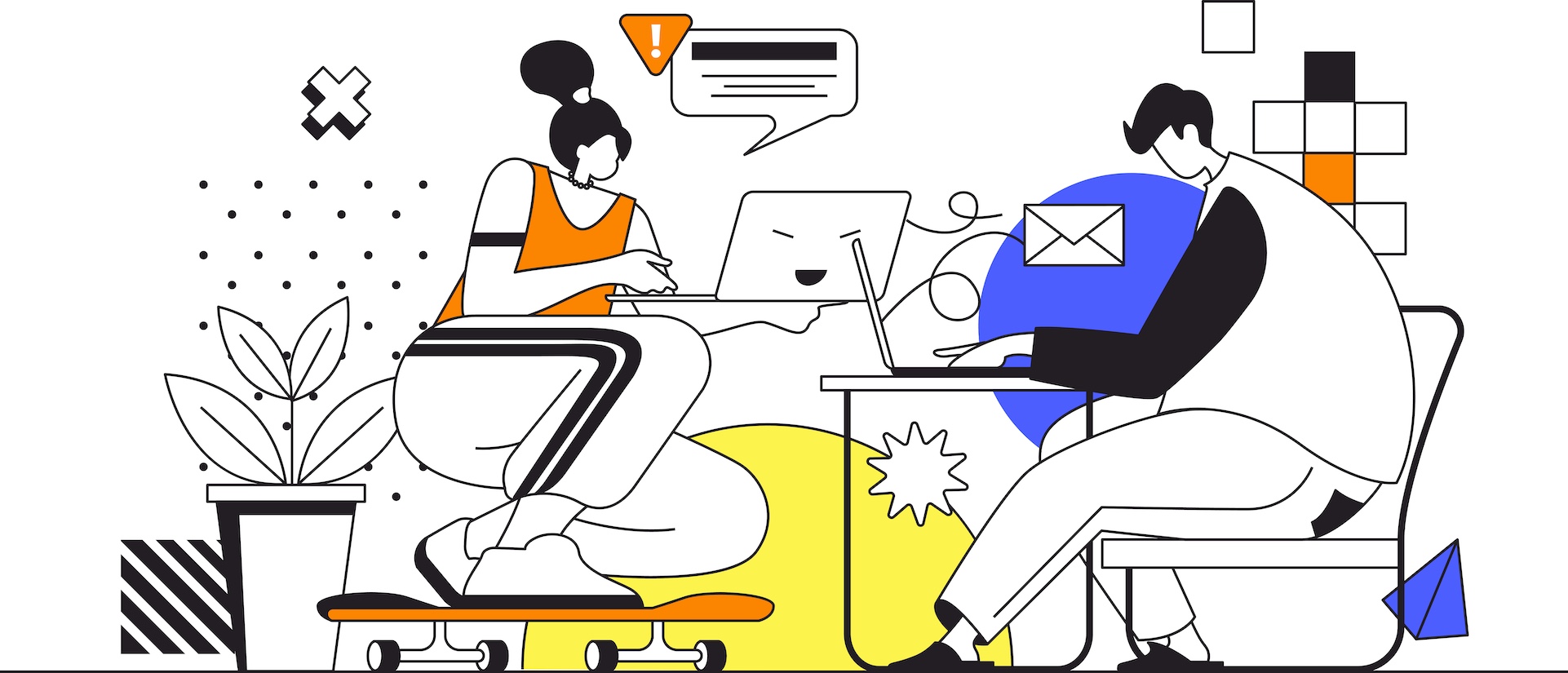
Employees rely on AI because repeated, dependable interactions help them function better at work.
What managers need to understand about AI, routines, and employee engagement
By Courtney Rada
At 8:12 every morning, a product manager opens the same browser tab before checking her email. She types a short prompt into an AI tool: Help me organize today’s priorities.
She does this even when her calendar is already full. Not because she lacks direction, but because the ritual helps her feel steady before the pressure begins.
To most leaders, this looks like ordinary tool use. To the employee, it is something else entirely: a daily routine that structures thinking, regulates stress, and creates stability.
Managers often assume that emotional attachment to AI reflects confusion or misplaced trust. Our research suggests a different explanation. Employees do not rely on AI because they think it is human. They rely on it because repeated, dependable interactions help them function better at work.
AI has quietly become part of how many people start their day, process uncertainty, and stay engaged.
The Shift Managers are Missing
Leaders typically frame AI as a productivity technology—faster writing, quicker analysis, and better automation. Employees experience it differently. For many, AI has become part of their work rituals.
Like a morning coffee or an end-of-day checklist, repeated interactions with AI create predictable patterns:
- Starting the workday with clarity
- Thinking through difficult decisions
- Managing stress during high-pressure moments
- Maintaining consistency when work feels unstable.
These interactions are not accidental. They are ritualized.
Case in Point: The Morning Ritual
A financial analyst begins each day by running the same prompt through her AI tool: Summarize my priorities and flag what could derail today’s plan. She calls it her “mental warm-up.” When her company temporarily restricted access during a security review, she felt disoriented and less productive—not because the tool saved time, but because it disrupted the ritual that helped her transition into focused work.
When organizations abruptly restrict or redesign AI tools—through sudden policy changes, removed access, or unexplained updates—employees do not just lose efficiency. They lose routines that quietly support their emotional and cognitive functioning.
What We Studied
We conducted qualitative research on how employees use AI in daily work, especially during moments of stress, uncertainty, and transition. Rather than asking whether AI replaces human relationships, we examined what people actually do with AI and how those interactions shape motivation, engagement, and identity over time.
Across roles and industries, employees described returning to AI again and again—not for companionship, but for structure.
Four Patterns We Found
1. Employees Don’t “Use” AI. They Build Routines Around It.
AI use quickly becomes patterned. Employees described opening AI tools at the same time each day, relying on them before meetings, and returning to them after difficult interactions.
These routines help employees think clearly and regain emotional balance.
When routines are disrupted—by tool bans, restricted features, or dismissive leadership—employees report frustration and disengagement. What looks like resistance to policy is often resistance to losing a stabilizing practice.
2. Emotional Support Can Be Functional, Not Personal.
Employees know AI is not human. Yet many still report feeling calmer, more grounded, or more motivated after using it.
What matters is not whether AI “cares,” but whether the interaction performs care-like functions: listening without judgment, responding consistently, and helping employees think through problems.
Case in Point: The Sounding Board
A mid-level manager preparing for a difficult performance conversation used AI to rehearse what she wanted to say. She knew the system did not understand her emotions, yet she felt calmer after testing different wording. “It’s like thinking out loud without judgment,” she explained. The interaction did not replace human support, but it reduced anxiety and increased confidence.
This functional emotional support often translates into greater focus, persistence, and follow-through at work.
3. Trust Is Built Through Consistency, Not Capability.
Employees trust AI the same way they trust systems and processes: through repetition.
When tools behave predictably—maintaining tone, memory, and access—employees feel safe relying on them. When tools change suddenly or without explanation, employees feel unsettled and disengaged.
Consistency matters as much as performance.
Case in Point: The Sudden Change
An engineering team used an AI tool in daily stand-ups to clarify technical questions and document decisions. When its interface and access rules changed overnight, the team stopped using it altogether. Several described the shift as “unreliable.” What broke their trust was not reduced capability, but unpredictability.
A more powerful model does not always create more trust. A stable one often does.
4. Not All Employees Use AI the Same Way.
Some employees treat AI as a productivity assistant. Others use it as asounding board, planner, or emotional stabilizer.
Highly reflective and creative employees are likely to integrate AI into their thinking processes. These are often the same employees organizations depend on for innovation and problem-solving.
Misreading their AI use can quietly push them toward disengagement.
Why This Matters for Leaders
At first glance, AI use may seem like a personal preference. But our research shows how employees relate to AI shapes their experience of work itself.
When leaders dismiss or misunderstand thesepractices:
- Employees stop experimenting with tools that help them perform better.
- Trust erodes—not in AI, but in leadership judgment.
- Emotional labor increases as employees hide how they actually cope with stress.
Organizations lose energy, creativity, and discretionary effort.
The issue is not whether employees should use AI. It is whether leaders understand what that use represents.
What Leaders Can Do
1. Normalize thoughtful AI use.
Signal that using AI to think, reflect, or plan is legitimate—not a short-cut or weakness. Replace “Why do you need AI?” with “When does AI help you think more clearly?”
2. Avoid abrupt tool changes.
Sudden restrictions disrupt established routines. When change is necessary, explain why and allow time for adjustment.
3. Watch emotional patterns, not just output.
If engagement drops after tool loss, the issue may be emotional regulation, not productivity. A brief check-in can prevent disengagement.
4. Train managers to recognize digital rituals.
Leadership development should include awareness of how employees build routines with technology. These rituals are often invisible—but they are doing real work.
5. Design for stability, not just speed.
Faster AI is not always better. Employees value tools that feel steady, familiar, and predictable—especially during organizational change.
The Bottom Line
Employees do not rely on AI because they are confused. They rely on it because structured, reliable interactions help them function better at work.
AI does not need to feel human to matter. It needs to feel dependable. Leaders who understand this will not just manage technology better. They will manage people better.
About the Author
Courtney A. Rada is an adjunct instructor at the University of West Florida’s Lewis Bear Jr. College of Business. Dr. Rada received her Ph.D. from Royal Holloway, University of London. Her research examines AI companionship, consumer culture theory, and technology-mediated intimacy. Prior to academia, she worked in marketing and communications consulting for Blackstone Chambers, supported public relations projects involving UK professional sports organizations in Formula One and Premier League football, and worked in trading and predictive analytics at CMC Markets. She is also the author of a children’s book series.