


Position Yourself for the Uncertainty that Lies Ahead
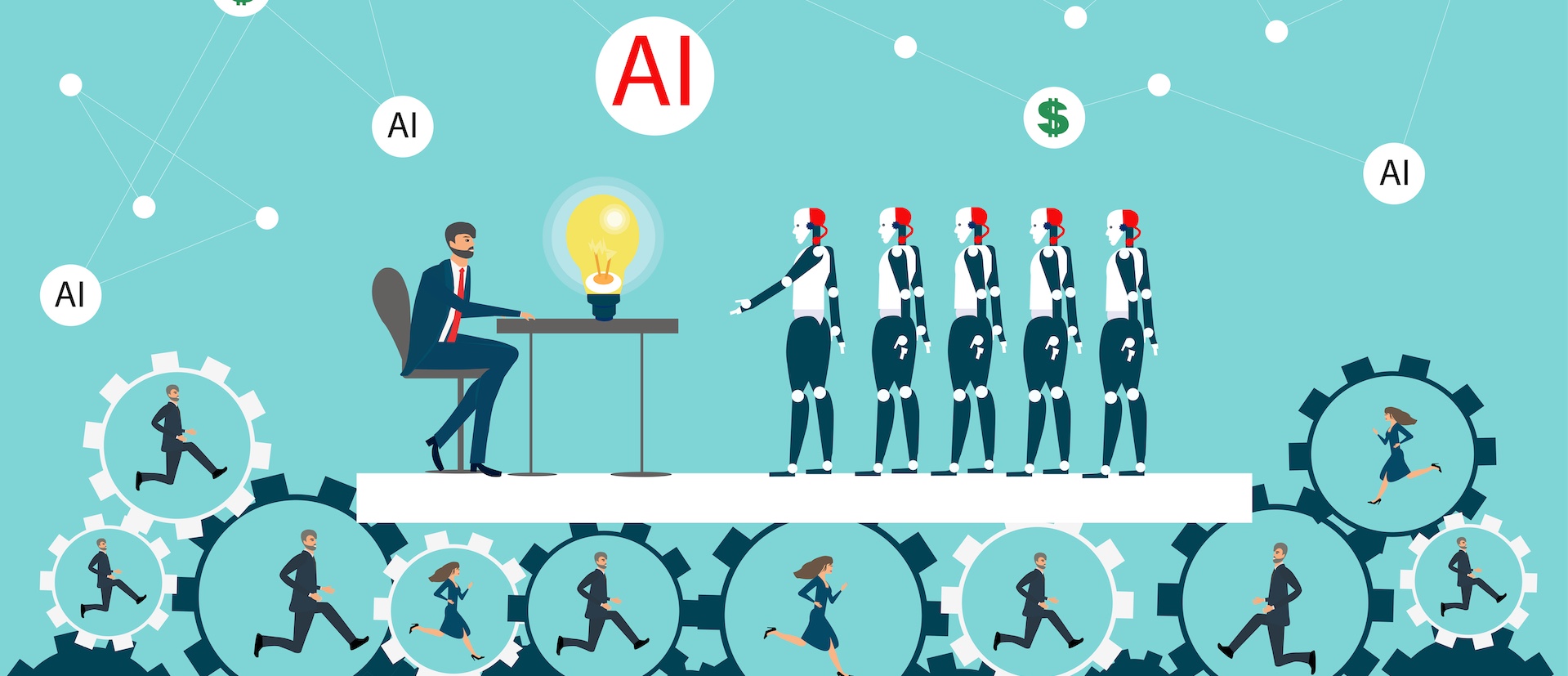
The AI Panel of Advisors provides a practical, affordable way to quickly deliver actionable, strategic insights, using multiple AI models.
A Practical Method for Strategic Foresight Using AI
By Chula King and Stephen A. LeMay
In today’s rapidly changing business environment, every organization faces the same dilemma. On the one hand, there is no denying that AI is reshaping industries and professions. On the other hand, the question of how this is occurring is less than certain. How will AI impact your competitive advantage? How will your current strategies play out in the future? How can you best position yourself and your industry for the uncertainty that lies ahead?
Business leaders who ask these questions often resort to the same playbook: hire expensive consultants, commission research reports, attend industry conferences, and so on. While these approaches have value, they share a common flaw. That flaw is seeking future insights from other people who often have conflicting views of the future. These insights provide information, but they don’t equip you with a framework to explore and process the scenarios yourself.
As business professors immersed in AI’s rapid advances, we face the same uncertainty. Rather than outsourcing our strategic thinking to consultants or waiting for a consensus to emerge from the noise of competing projections, we took a different approach. We convened an AI Panel of Advisors trained on huge datasets to make predictions based on patterns. That AI Panel of Advisors was comprised entirely of the world’s most advanced AI models: ChatGPT, Claude, Gemini, and Perplexity. We assigned the panel of AI Advisors a specific role, provided a context, and asked a specific question: What will our jobs as business professors look like in five years and what should we do now to prepare?
The result was a coherent and consistently aligned strategic forecast that offered clarity and was produced in minutes at negligible cost. Most importantly, the method that we used was simple but powerful, and something that business leaders can use to gain clarity about the future of their own industry or profession.
Here’s how we did it, and how you can use the same approach to build your own AI Panel of Advisors.
The Method: Convening Your Panel
The approach is straightforward, and that’s part of its value. You don’t need technical expertise or special access—just a clear question and a willingness to engage seriously with the outputs.
Start by crafting a prompt that frames your strategic question with enough specificity to generate useful responses. Identify your role, your context, and your time horizon. Then ask the model to adopt a perspective—a strategist, an analyst, a consultant who has studied your problem deeply. This role-assignment isn’t theater; it helps the model draw on relevant patterns in its training rather than defaulting to generic advice.
In our case, asking each model to respond as an organizational strategist with deep research experience was intentional. Giving the models a clearly defined role encourages more focused and relevant analysis. It also helps the responses reflect expert-level reasoning rather than generic observations.
Run that identical prompt through several leading models. We used four—ChatGPT, Claude, Gemini, and Perplexity—but three would suffice. The goal is independent variation: each model has been trained on somewhat different data with different architectural choices, so their responses won’t be identical even to the same prompt.
Use of multiple models also increases reliability. When independent systems converge on similar themes despite different training data and architectures, the resulting signals are more trustworthy because they reflect widely repeated patterns in current expert thinking.
Then comes the step that proved most illuminating. Take all the responses and upload them to one of the models with a new prompt: synthesize these analyses. Identify where they agree, where they diverge, and what the strongest common recommendations are. We repeated this synthesis with multiple models to ensure the themes weren’t artifacts of one system’s interpretive tendencies.
What emerged was more coherent than we expected.

What the Panel Revealed
Across all four models, the core message was consistent: our jobs aren’t disappearing, but their center of gravity is shifting substantially. The phrase that appeared in various forms across every response was the move from “information distributor” to something more like learning architect, AI orchestrator, and—a term we found particularly thought-provoking—algorithmic auditor.
This pattern of convergence was noteworthy. Even though the models differ in design and training sources, all four independently highlighted the same foundational shifts. They pointed to changes in faculty roles, increased automation of routine work, a greater emphasis on human judgment skills, the expansion of AI-supported research workflows, and a growing need for faculty involvement in governance.
The models estimated that AI would absorb somewhere between 20 and 40 percent of our current workload: routine grading, basic content delivery, standard advising queries, first drafts of administrative documents. What remains—and what grows in importance—is the high-judgment work that AI handles poorly: designing learning experiences, coaching students through complex problems, navigating ethical ambiguities, and helping an institution govern its own use of these tools responsibly.
One theme surprised us with its emphasis. Every model emphasized that students will increasingly arrive with powerful AI assistants integrated into their workflow. The professor’s differentiating value, then, isn’t knowing more than the AI—it’s helping students use AI well, challenge its outputs critically, and develop the capabilities that remain distinctly human: judgment, ethical reasoning, leadership, and communication under uncertainty.
Research, too, shifts rather than vanishes. The models described a future where AI handles literature synthesis, data cleaning, and preliminary drafts, while the researcher’s value concentrates in asking the right questions, interpreting results with domain expertise, maintaining methodological rigor, and ensuring transparency about AI’s role in the work.
Perhaps most unexpected was the convergence around governance. Every model suggested that faculty who understand AI deeply will be drawn into institutional decision-making—not just teaching with these tools but helping design policies for their use, auditing algorithmic systems that affect students and faculty, and shaping curriculum to address a transformed professional landscape. The economic subtext was frank. Business schools, the models suggested, will face pressure to unbundle their offerings into shorter, subscription-based, lifelong learning formats. Faculty will differentiate into two broad categories: “creators” who develop content and research with wide reach, and “facilitators” who provide high-touch mentoring and learning design. The strategic advice was clear: position yourself in one category or learn to straddle both.
This “unbundling” trend was especially pronounced across models. It suggests not only pedagogical change but also deeper economic pressures that are reshaping how business schools package and deliver expertise.
What This Method Cannot Do
It would be easy to overstate what we’ve described here. The convergence across models feels persuasive—but that persuasiveness is precisely why intellectual honesty matters.
These models are pattern-recognition systems trained on vast quantities of human-generated text: research papers, business journalism, consulting reports, conference proceedings, forecasts from credible and less credible sources alike. When they converge, they’re revealing something real. But what they’re revealing is simply the themes that currently dominate expert thinking. They’re surfacing the conventional wisdom, albeit with impressive synthesis and organization. That’s valuable. Conventional wisdom among informed experts is a reasonable starting point for strategic planning. But it has blind spots.
First, the models cannot anticipate genuine discontinuities—the black swan events, the breakthrough technologies, the regulatory shocks that reshape industries in ways no pattern from the past could predict. They extrapolate from what has been written; they don’t imagine what hasn’t been conceived yet.
Second, convergence can reflect shared biases as much as shared insight. If the expert discourse on a topic has clustered around certain assumptions—about the pace of adoption, the readiness of institutions, the preferences of consumers—the models will echo those assumptions back confidently. They cannot tell you when the experts are collectively wrong.
Third, and most importantly, the models know nothing about your specific situation. They don’t know your organization’s culture, its financial constraints, its competitive idiosyncrasies, or your own appetite for risk. They can offer a general map; they cannot tell you which path through the terrain makes sense given where you’re starting from and what you’re willing to sacrifice to get somewhere else.
This is why it mattered that we asked each model to respond from a defined expert viewpoint or persona and then compared the results across systems. Giving the models a clear and consistent role produced more focused analyses. Reviewing multiple responses also reduced the chance of mistaking one system’s blind spots for universal insight.
This is why the method supplements but cannot replace strategic judgment. The AI panel gives you a structured way to survey the landscape of informed opinion. It surfaces themes you might have missed and challenges assumptions you didn’t know you held. But the weighing—deciding what matters most, what to act on, what to ignore—remains inescapably yours.
We’ve found it useful to treat the outputs not as recommendations to follow but as hypotheses to stress-test. When the models say faculty will shift toward governance roles, the productive question isn’t “Is this true?” but “If this were directionally correct, what would I do differently? And what evidence would tell me it’s happening faster or slower than expected?”
That reframing turns the exercise from forecasting into something more valuable: disciplined preparation for multiple futures.
The Value of the Exercise Itself
There’s a secondary benefit worth noting. The process of crafting a good prompt forces clarity about what you’re actually trying to understand. You can’t ask a useful question about your professional future without defining what your profession actually involves, what you consider essential versus peripheral, and what time horizon you care about.
More than once, we found that the most useful moment in the exercise came before we saw any output—when we had to articulate our own assumptions clearly enough for the models to engage with them. The AI became a mirror, reflecting the shape of our own thinking back to us in ways that revealed gaps and contradictions we hadn’t noticed. This is perhaps the deepest reason to try the method. Not because the models will tell you the future—they won’t. But the discipline of asking them forces you to get clearer about what you think, what you’re uncertain about, and what would actually change your mind.

An Invitation to Experiment
We’ve shared our experience with a specific question about a specific profession. But the method generalizes. Whether you’re a supply chain manager wondering how autonomous systems will reshape logistics, a financial analyst considering how AI-driven research tools might change your value proposition, or a healthcare administrator thinking through the implications of diagnostic AI for your workforce—the same approach applies.
Craft a prompt that captures your situation with precision. Run it through multiple models. Synthesize the outputs. Look for convergence and divergence. Then ask yourself the only question that ultimately matters: if this is directionally correct, what would I do differently starting now?
You may find that the results are both clarifying and sobering. The models we consulted suggested we should become genuinely fluent in AI tools, redesign our courses assuming every student has an AI assistant, carve out a niche at the intersection of our discipline and AI, involve ourselves in institutional governance of these technologies, and build a professional presence that extends beyond our institution’s walls. That’s not a modest agenda. But it’s a concrete one—and concreteness is the enemy of the vague anxiety that often surrounds discussions of AI and work.
You may also find that your results look different from ours. Professions
vary. Industries vary. The expert discourse on AI’s impact is more developed in some fields than others, and the models will reflect that unevenness. If your synthesis surfaces less convergence and more contradiction, that’s information too—it tells you the future of your field is genuinely contested, which might call for scenario planning rather than a single strategic bet.
We’d encourage you to try the exercise with colleagues. Compare results. Discuss where your syntheses align and where they differ. The conversation that follows—grounded in concrete outputs rather than abstract speculation—may be more valuable than the outputs themselves.
Finally, remember that you’re not obligated to agree with what the panel tells you. These models are sophisticated summarizers of human thought, not oracles with privileged access to what’s coming. They can be wrong. The experts whose work they’ve absorbed can be wrong. You might see something they’ve missed—a local opportunity, a structural barrier, an emerging trend that hasn’t yet saturated the literature.
But you’ll see it more clearly for having consulted them. That’s the modest promise here: not certainty, but a more disciplined uncertainty. Not a prediction of the future, but a systematic way to prepare for several plausible versions of it.
For business leaders, this method offers a practical strategic advantage because multi-model convergence is not a prediction but a directional signal. It reflects themes that appear consistently in expert analyses and commentary. Treating these signals as hypotheses to stress-test can sharpen planning, reduce blind spots, and help leaders navigate uncertainty by creating a structured opportunity for preparation.
The tools are available. The method is simple. The question is whether you’re willing to ask—and then to sit with what you hear.
Advisory Points: Principles for Using AI as a Strategic Sounding Board
1. Treat convergence as signal, not certainty. When multiple models independently reach similar conclusions, it suggests the themes are well-represented in expert discourse. This doesn’t make them inevitable—it makes them worth planning for.
2. Divergence is data, too. When models disagree or emphasize different aspects, you’ve identified areas of genuine uncertainty or emerging debate. These deserve closer attention and perhaps traditional research.
3. Specificity improves output. Vague prompts yield generic responses. The more precisely you define your role, industry context, and time horizon, the more useful the analysis becomes.
4. Cross-validation beats single-source reliance. No model has privileged access to the future. Running the same question through multiple systems and synthesizing the results reduces the idiosyncrasies of any one model’s training data or architecture.
5. You remain the strategist. AI can surface patterns and organize information, but it cannot weigh those patterns against specific culture, resources, competitive position, or risk tolerance. That judgment is yours.
6. Use the exercise to surface assumptions. Often the most valuable outcome isn’t the AI’s answer—it’s discovering which of your own assumptions the models challenge or confirm.
7. Revisit periodically. Models update, industries shift, and your own circumstances change. This isn’t a one-time exercise but a repeatable discipline.
Checklist: Running Your Own AI Advisory Panel
- Define your strategic question clearly (role, industry, time horizon, specific concerns)
- Select three to four leading AI models to query
- Run the identical prompt through each model independently
- Save or export each response in full
- Upload all responses to one model and request a synthesis identifying themes, agreements, and disagreements
- Repeat the synthesis step with at least one other model to check for consistency
- Identify the two or three strongest convergent themes
- Note any significant divergences or gaps
- Translate findings into concrete questions: If this is directionally correct, what would I do differently?
- Identify one near-term action you can take in the next 30 days
- Schedule a follow-up session in six months to reassess
Suggested Prompts: Templates You Can Adapt
For Individual Career Planning
I am a [job title] in the [industry] sector with [X years] of experience. Please assume the role of a workforce strategist who has conducted extensive research on how AI will affect professionals in my field. Based on this research, what will be the nature of my job in five years? What capabilities will be most valuable? What should I be doing now to prepare?
For Business Unit or Departmental Strategy
I lead a [department/function] at a [size/type] company in the [industry] sector. Please assume the role of a management consultant who has studied AI’s impact on this function across multiple organizations. What operational changes should I anticipate over the next three to five years? Where will AI augment my team’s work, and where might it replace current processes? What investments in skills, technology, or structure should I prioritize now?
For Competitive and Market Analysis
I am a strategist at a market/industry. Please assume the role of an industry analyst who has researched how AI is reshaping competitive dynamics in this sector. Which business models are most vulnerable to disruption? Which are best positioned to leverage AI? What signals should I watch that would indicate accelerating change?
For Organizational Governance and Policy
I serve on the leadership team of a [type of organization]. Please assume the role of an expert in AI governance and organizational policy. What frameworks should we consider for governing AI use across our organization? What risks should we prioritize? What policies have leading organizations adopted that we should evaluate?
For Synthesis (After Initial Responses)
I have attached responses from four different AI models to the same strategic prompt. Please provide a comprehensive synthesis that identifies: (1) the major themes where all or most models agree, (2) any significant points of divergence, (3) the strongest recommendations that appear across multiple responses, and (4) any gaps or blind spots you notice in the collective analysis.
About the Authors
Chula King is a Professor of Accounting and a Faculty Fellow in Educational Technology at the University of West Florida. Dr. King earned her Ph.D. in Accounting from Louisiana State University. Her work investigates how technological innovations are transforming the roles of faculty and students’ learning experiences, with a current emphasis on generative AI, AI literacy, prompting and verification, academic integrity, and the changing role of educators. She is particularly dedicated to preparing students for an AI-driven workforce by helping them develop critical thinking, judgment, and responsible AI use, alongside disciplinary expertise.
Stephen A. LeMay is a Professor at the University of West Florida. He earned his Ph.D. from the University of Tennessee. Dr. LeMay has a deep background in transportation and logistics and has authored two books, a textbook and a research book on logistics and transportation topics. LeMay has examined supply chain design, truck driver job satisfaction, supply chain security, computer literacy among undergraduate business students, and other logistics and marketing topics.