


Conservation Lands
Pensacola Campus
On the UWF Pensacola campus, there are over 1000 acres designated for conservation. This area includes four major habitat types: sandhill, hammock, swamp forest, and marsh vegetative systems. Two of the most important ecosystems that characterize the main campus landscape are longleaf pine and wetlands. UWF hosts over 900 vascular plant species, the greatest number of any university of the southeastern United States. You can learn more from the Michael I. Cousens Herbarium.
UWF Living Lab: Forest
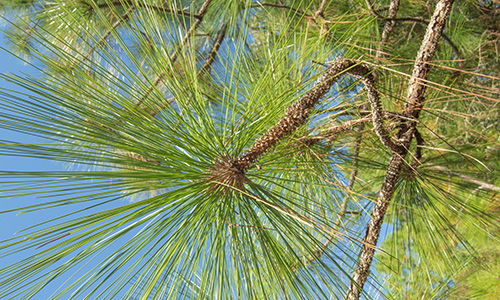
UWF’s forest Living Lab longleaf pine system is a secondary forest recovering from logging that occurred prior to the University’s foundation. Longleaf pine is an ecologically and historically important species that is found throughout the southeastern United States.
According to the USDA, it once covered an estimated 92 million acres as an extensive North American forest system. Now, it only covers a fraction of that land. This decline is largely attributed to development, logging, and fire suppression.
Longleaf pine habitat supports many species, including the threatened Gopher Tortoise, the endangered Red-Cockaded Woodpecker, and the threatened Indigo Snake. By restoring this ecosystem, UWF will support the recovery of important habitat for several protected species. Longleaf pine is also well-adapted to this climate and is more resilient than many other ecosystem types.
Wetlands
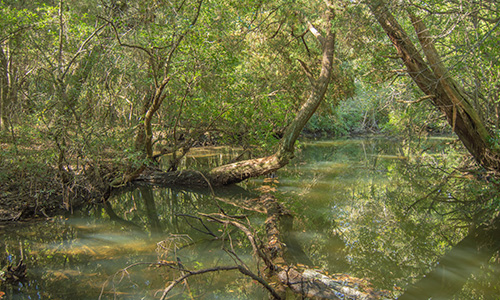
The UWF Pensacola Campus lies within the Pensacola Bay watershed and contains Thompson Bayou, which flows into the Escambia River. Wetlands on campus identified by the National Wetlands Inventory Program include a forested marsh system as well as emergent wetlands.
Generally, wetlands perform a wide variety of ecosystem services, including wildlife habitat, water filtering, flood prevention, shoreline protection, and opportunities for recreation. They are sensitive to development and valuable to protect.
The University of West Florida allows limited recreational and educational uses in conserving its wetlands.
UWF Living Lab: Beach
The University leases a 152-acre parcel on Santa Rosa Island between the residential zone and Gulf Islands National Seashore. It spans both sides of the road, meeting both Sabine Bay and the Gulf. This ecosystem supports a variety of wildlife, including endangered nesting shorebirds and sea turtles. These species are protected, and visitors must be careful to avoid disturbing any dunes, vegetation, or wildlife nests.
The UWF Beach Conservation Area is open to university students, staff, faculty, and the public daily from sunrise to sunset. However, extreme caution is needed to protect bird nesting areas for threatened coastal species during nesting season, access during these times is forbidden.