Department Research
The Biology Department conducts diverse, externally funded research spanning molecular and cellular biology, ecology and evolution, marine biology, exercise physiology, and translational biomedical research. Our faculty provides extensive research opportunities for undergraduate and graduate students across all areas of modern biology.
Research Funding and Impact
Biology Department faculty have secured research funding from federal agencies including the National Institutes of Health (NIH), National Science Foundation (NSF), and private foundation sources. Current active grants support faculty research programs and provide hands-on training for undergraduate and graduate students.
Major Research Areas
Cell and Molecular Biology
Dr. Peter Cavnar investigates cellular mechanisms regulating cell motility and adhesion, with applications to cancer metastasis, wound healing, and immune system function. His research on neutrophil biology and severe congenital neutropenia uses advanced cell biology and microfluidics approaches. Recent publications in PLOS ONE examine the detrimental effects of atypical antipsychotic medications on human neutrophils through collaborative work with undergraduate and graduate students.
Evolutionary Biology and Genomics
Dr. Waldir Miron investigates the genomic basis of different paces-of-life syndromes in killifishes through a $45,000 CNPq grant. His research has been published in Nature Communications and Proceedings of the Royal Society B. His laboratory features two complete zebrafish self-circulating systems for experimental research on reproductive systems and life history evolution.
Marine Biology and Conservation
Dr. Alexis Janosik focuses on molecular ecology and evolution of marine invertebrates and fishes. Dr. Christopher Pomory studies invertebrate physiology, behavior, and ecology with emphasis on stress responses in marine environments. Dr. Viktoria Bogantes was awarded a $44,500 PPBEP grant to study the health of Pensacola's salt marshes by examining infaunal communities in both natural and restored habitats.
Neuroscience and Alzheimer's Disease Research
Dr. Rodney Guttmann leads translational research in Alzheimer's biomarker discovery using phage display technology to identify blood and cerebrospinal fluid markers for early disease detection.
Wildlife Ecology
Dr. Phil Darby's research on apple snails and endangered snail kites was featured in "The Americas," a 10-part BBC/NBC nature documentary series narrated by Tom Hanks. He served as scientific consultant for Episode 6 "The Gulf Coast," which aired in March 2025 and is available on Peacock and YouTube TV.
Exercise Physiology and Human Performance
Dr. Jacob Siedlik conducts research in exercise physiology, human performance, and muscle metabolism. He was recently appointed to the Florida State Advisory Board of the National Strength and Conditioning Association and is collaborating to host the Florida Regional Conference in November 2025 at UCF.
Forensic Biology
Dr. Michelle Jenson developed BSC4401L, Forensic Biology, a new lecture-laboratory hybrid course that provides entry-level skills for forensic serologists and DNA analysts. Her undergraduate research projects apply molecular biology techniques to forensic science questions.
Microbiology and Antibiotic Resistance
Tabithia Ross received a $5,000 Living Lab Grant to investigate bacterial antibiotic resistance genes within UWF's Living Lab and assess whether pedestrian activity increases the presence of resistance genes on campus.
Stem Cell Biology
Dr. Ahmed Lotfy recently served as Guest Editor for a Research Topic entitled "Advances in Perinatal Stem Cells Research and Applications" in Frontiers in Cell and Developmental Biology, highlighting emerging research on stem cells derived from umbilical cord, placenta, and amniotic membrane tissues.
Student Research Opportunities
The Biology Department provides numerous pathways for undergraduate and graduate students to participate in cutting-edge research. These opportunities span all research areas and provide hands-on training in modern biological research techniques.
Directed Independent Study (DIS)
Undergraduates may work with graduate students and faculty in research laboratories, assisting with thesis projects, sample collection, data analysis, and laboratory maintenance. Students can earn up to 2 credit hours while gaining authentic research experience.
Honors Thesis Research
Qualified students can conduct independent research projects under faculty mentorship, producing original scholarship that fulfills Honors College requirements.
Office of Undergraduate Research (OUR) Grants
Undergraduate students can apply for competitive grants to support their research projects, gaining experience in grant writing and independent research.
Field Research Experiences
Students participate in field courses and research projects in diverse locations, including Indonesia, Costa Rica, Honduras, the Florida Keys, and the Dry Tortugas. These experiences combine international travel with ecosystem-level research training.
Graduate Research Assistantships
Master's students conduct thesis research in faculty laboratories with financial support through research assistantships, grants, and departmental funding. Graduate students also mentor undergraduate researchers and develop leadership skills.
Research Facilities
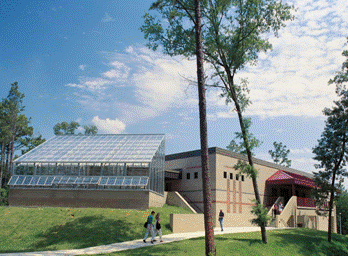
The department maintains extensive research facilities, including molecular biology laboratories, zebrafish research systems, marine research aquaria, greenhouse facilities, and access to research vessels through the UWF Marine Research Center. These resources support diverse research programs and provide students with professional-quality research training environments.
Research Impact and Dissemination
Biology faculty publish in leading scientific journals, including Nature Communications, Nature Genetics, PLOS ONE, Proceedings of the Royal Society B, Limnology and Oceanography, and many others. Department faculty serve on editorial boards, review panels for funding agencies, and advisory committees for scientific organizations. Recent media coverage includes Dr. Darby's work featured in the BBC/NBC documentary series "The Americas," which reached global audiences and showcased UWF's research excellence. Our research directly contributes to solving problems in human health, environmental conservation, and biotechnology development while training the next generation of scientists.
Students interested in research opportunities should contact individual faculty members directly or speak with the Graduate Program Coordinator. Information about faculty research interests and contact information is available on the Biology Faculty page.