


Secure Your Digital Resources... Now! Before It's Too Late
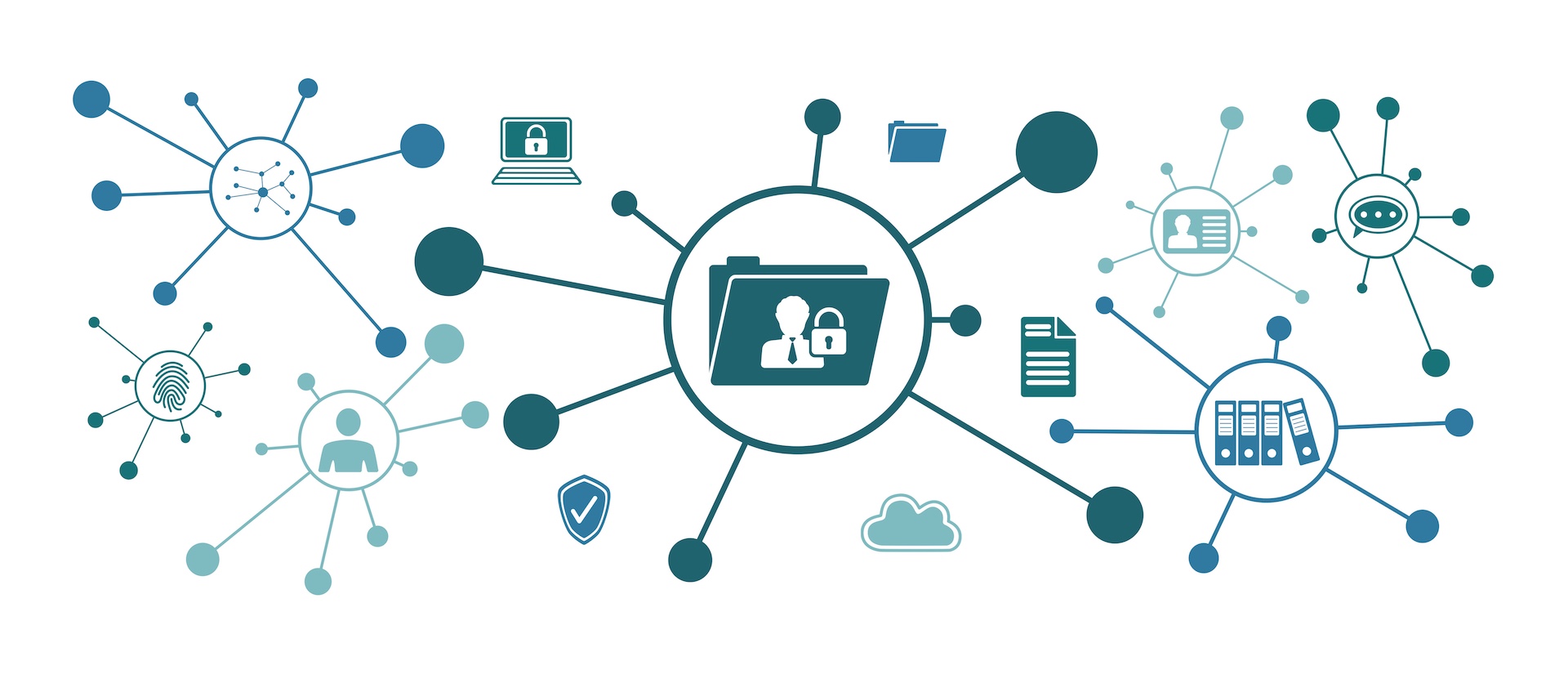
Blockchain technology can protect critical production data.
By Stephen A. Lemay, S. Lane Lambert and Bruce I. Davidson
Manufacturing companies face a growing challenge: protecting the integrity of critical production data while enabling collaboration across complex supply chains. Manufacturing Bills of Materials (MBOMs)—the detailed blueprints that define what components go into every product—represent some of the most valuable and vulnerable data in enterprise systems. New blockchain technologies offer promising solutions, but implementation requires careful strategic planning.
The Hidden Risk In Manufacturing Data
Every manufactured product, from smartphones to aircraft, relies on MBOMs that specify exactly which parts are needed, in what quantities, and how they connect. These documents drive everything from procurement to quality control to cost accounting. Yet most manufacturers store MBOMs in traditional enterprise resource planning (ERP) systems with significant vulnerabilities.
Current ERP systems allow any authorized user to modify critical data without requiring approval from other stakeholders. An engineer making a well-intentioned update could inadvertently introduce errors that cascade through the entire production process. Traditional databases also lack continuous tamper de-tection—companies must actively check for unauthorized changes rather than being automatically alerted.
The ERP market, valued at $43.72 billion in 2020, is expected to reach $117.09 billion by 2030, with manufacturers comprising 47 percent of all organizations planning to purchase ERP software. As these systems grow more central to operations, the risks of data integrity failures multiply.
Leadership Actions
Assess Your MBOM Risk Profile
- Evaluate the complexity and sensitivity of your product structures
- Identify potential financial and operational impacts of data corruption
- Map all stakeholders who need access to MBOM data across your supply chain
Pilot Before You Scale
- Start with a single product line or less complex MBOMs
- Test blockchain integration with existing ERP workflows
- Measure performance impacts on transaction processing times

Five Blockchain Solutions For Manufacturing
Research reveals five distinct approaches to securing MBOM data using blockchain technologies, each with different trade-offs between security, performance, and implementation complexity.
Oracle Blockchain Table
Oracle’s newest offering creates database tables with blockchain-like properties—each row contains cryptographic hashes linking it to previous entries, making unauthorized changes immediately detectable. This approach requires no distributed network, enabling faster processing than traditional blockchain while maintaining tamper evidence.
Best For: Organizations already using Oracle databases who want blockchain benefits without network complexity.
Oracle Blockchain Platform Enterprise Edition
Built on Hyperledger Fabric, this solution creates permissioned blockchain networks that can span multiple organizations. All participants must reach consensus before processing changes, preventing individual users from making unauthorized modifications.
Best For: manufacturing consortiums requiring multi-party validation of design changes.
Microsoft Azure SQL Database Ledger
Microsoft’s approach combines traditional updatable database tables with append-only history tables that cryptographically preserve all changes.
Organizations can generate periodic digests (cryptographic summaries) to verify data integrity without continuous blockchain processing.
Best For: Companies wanting blockchain security benefits while maintaining familiar database operations.
SAP HANA Blockchain Ledgers
SAP’s solution connects existing blockchain platforms to SAP ERP systems, creating synchronized representations of blockchain data within the database. Changes flow database. Changes flow both ways—updates to the ERP can modify the blockchain, and blockchain changes update the ERP.
Best for: SAP S/4HANA users seeking integration with external blockchain networks.
IBM Blockchain Platform
IBM’s Hyperledger Fabric-based platform focuses on permissioned networks with strong privacy controls. It supports multiple smart contracts and enables private data channels for sensitive manufacturing information
Best For: organizations prioritizing privacy and regulatory compliance in blockchain networks.
The Cloud Alternative
Not every organization needs blockchain technology. Companies with simpler product structures and fewer external partners might achieve adequate security using cloud-based ERP systems with enhanced controls:
- Digital signatures to track who makes changes
- Cryptographic hashing to detect unauthorized modifications
- Enhanced access controls restricting modification privileges
- Comprehensive audit trails documenting all data changes
| Solution | Consensus Required | DLT Network | Best Performance |
|---|---|---|---|
| Oracle Blockchain Table | No | No | ✓ |
| Oracle Platform EE | Yes | Yes | X |
| Azure SQL Ledger | No | No | ✓ |
| SAP HANA Blockchain | Yes | Yes | X |
| IBM Blockchain | Yes | Yes | X |
Cloud computing offers agility and cost savings, but rapid transitions have raised privacy, confidentiality, cybersecurity, and data integrity concerns. Manufacturing companies’ ERP systems often store MBOMs containing confidential, competitive-sensitive product data.
The key is matching security investments to actual risks. A defense contractor manufacturing complex military systems faces different threats than a company producing consumer goods with straightforward supply chains.
Strategic Implementation Framework
1) Risk Assessment
Analyze your MBOM landscape using COSO framework. Consider product complexity, supply chain partners, regulatory requirements, competitive sensitivity, and financial impact of failures.
2) Technology Selection
Match blockchain solutions to specific needs. Choose Oracle Blockchain Table for tamper detection, distributed platforms for multi-party