


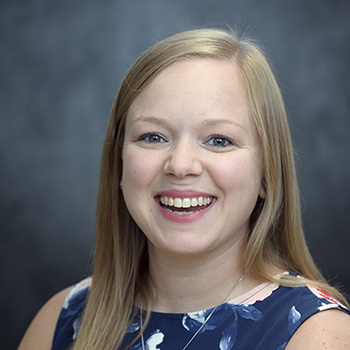
Kara Dingess
Assistant Professor of Psychiatry, Tulane University’s Center for Autism and Related Disorders
At Tulane University’s Center for Autism and Related Disorders, Kara runs daily operations as both a psychologist and instructor. Working closely with patients, Kara provides clarity and resources while also teaching interns and residents on clinical rotations.
What was growing up with Juvenile Idiopathic Arthritis like?
I was first diagnosed with Juvenile Idiopathic Arthritis when I was 6 years old, and I spent the majority of my childhood in various doctor’s offices and hospital rooms. I like to joke that I spent more time at the children’s hospital than I did at my own high school. After a series of bad hospitalizations when I was 15 years old, my diagnosis changed to Systemic JIA, which meant that not only just my joints but my skin, organs and pretty much my whole body were being impacted. Most people assume arthritis is just for grandparents, but SJIA occurs in 5-15% of JIA cases, with 300,000 kids being diagnosed each year with JIA. The disease is very unpredictable, which made trying to fit in throughout high school and college a bit harder – so much so that I wanted nothing to do with my diagnosis. I wanted nothing more than to be “normal.” It wasn’t until I volunteered with local kids at an arthritis camp that I was able to realize that being “normal” was overrated, and I unlocked my sense of purpose.
How have you applied your personal experiences to your career?
Once I turned 18, my diagnosis changed to Psoriatic arthritis, and while my disease still impacts my whole body, on paper I had to drop the “J” from my diagnosis. My experiences with each form of my arthritis have allowed me to empathize with my patients and truly understand where they are coming from and why having answers and resources are so important to them. As a psychologist, I conduct assessments on children as young as 18 months old up through adulthood, working with a variety of different patients and providing them with clarity and direction at a vulnerable time in their lives. I know what it’s like to not have answers or not know if there’s anyone out there who can relate. These experiences also pushed me to give back to a community filled with kids just like me so that they may feel hopeful about a future full of amazing opportunities. One thing that I tell kids when I meet them is that despite all of the independence and resilience that is thrusted upon us at a young age, it’s ok to not be ok. Most people say that we are superheroes in our own right, but sometimes it’s ok to take the superhero cape off and have a bad day.
How were you supported both personally and professionally while a student at UWF?
In 2013, I graduated from the University of West Florida with a bachelor’s degree in psychology and a minor in education. During my time at UWF, some of the biggest support and mentorship I received was from the women’s basketball coaches. Coach Yelton and Coach Ivey taught me responsibility, leadership and resilience. I learned how to communicate and work alongside individuals with different backgrounds, which is something I still apply to my career and volunteering today. Being an Argo means belonging in a place and time that cannot be rewritten and the feeling of home no matter how far you travel. I love coming back to be a part of the community as a booster for the women’s basketball team and the cheerleading team.