Summer Cyber Experience
2026 Cyber & AI Summer Camp Experience
Sponsored by

![]() |
School is almost out.
June is almost here.
That can only mean one thing.
Time for whacky, hacky fun known as the ...
Cyber & AI Summer Camp Experience!
|
๐จ 2026 Cyber & AI Summer Camp Experience ๐จ
Ready to step into the world of cybersecurity and artificial intelligence?
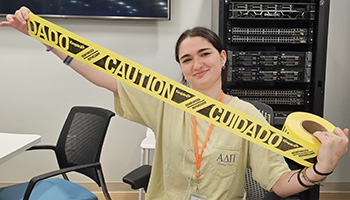
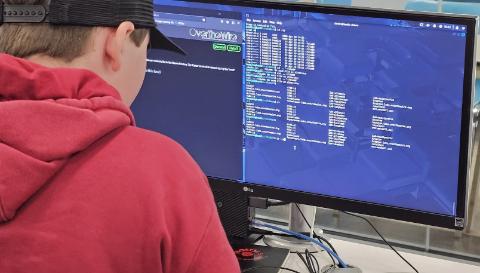
This isn’t a sit-and-listen camp—this is where you get your hands dirty, think like a hacker, and build real skills.
๐ฎ Learn through interactive games and “enter-the-scenario” missions
๐ ๏ธ Build real tradecraft using the same tools the pros use
๐ Solve real problems in cyber, AI, and digital investigations
๐ Break out (or in ๐) during the Cyber Escape Room
๐ Compete in a live Capture the Flag (CTF) showdown
Along the way, you’ll team up, think critically, and push your limits—all while figuring out if this is your path.
๐ฅ Make new friends
๐ง Learn seriously cool skills
๐ป See what it’s like to work in cyber & AI
The question is simple:
๐ Do you have what it takes to hack it?

Check back here for the application link.
Week 1 Foundations Camp
June 1-5, 2026, 8:30 a.m. – 4:30 p.m.
New to cyber? No problem. This is for you.
Week 2 The Guild Camp
June 8-12, 2026, 8:30 a.m. – 4:30 p.m.
Been around a while or been to camp before? It’s time to step up your game.
No cost to participants or their families.
Lunch and snacks provided.
All students MUST be 13 or older as of June 1st.
Location:
Camps are held at the Center for Cybersecurity and AI
SCI Building, 2nd Floor
220 W. Garden St.
Downtown Pensacola
How much does it cost?
The generous support of Regions Foundation allows these camps to be offered FREE of charge.
For more information, contact us at cyberai@uwf.edu.
About Regions Foundation

2021 GenCyber Camp Highlights
The UWF Pathways to Cyber Program offered two GenCyber camps in June 2021. The first was UWF GenCyber Guiding Cyber Mentors Camp, a week-long camp for educators in grades 1-12. Teachers learned about cybersecurity concepts and cybersecurity ethics through hands-on activities via online instruction. They developed lesson plans for their classrooms through experiential and role-playing activities.
The second camp, GenCyber Journey in Cybersecurity: A Girl Scouts Adventure, was launched later in the month as an exciting way to increase diversity in the profession. The Center partnered with the Girl Scouts of Gateway Council for an interactive, online, cyber-themed summer program aimed at girls in grades 6-8. We connected GenCyber Cybersecurity Concepts to the Cadette Cybersecurity Journey and created an opportunity for each Scout to earn all 3 journey badges (Cybersecurity Basics, Cybersecurity Safeguards, and Cybersecurity Investigator) by the end of the week.
The Pensacola News Journal and UWF Newsroom covered the camp. Click the links below for their coverage.

2019 UWF Pathways to Cyber Camps
The UWF Pathways to Cyber Program offered a GenCyber camp for high school students on June 17-21. The camp served as a platform for a statewide program to increase interest in cybersecurity careers and workforce diversity, enhance cybersecurity awareness and improve cybersecurity content and teaching methods for high school curricula.
The camp was composed of high school students from 9th to 12th grade and 2019 high school graduates, who learned about Cybersecurity First Principles together through engaging curricula and hands-on activities in Cyber Operations And Security Training (COAST) Lab and the Florida Cyber Range. The five-day fast-paced program served as an introduction to the Cybersecurity First principles, cybersecurity careers, and how to utilize the Linux operating system and command line. Additionally, the program provided participants with a practical learning experience and perspective on the broader topic of cybersecurity.
The University of West Florida also hosted Guiding Cyber Mentors, a five-day GenCyber teachersโ camp with 20 teachers targeted at grades 1-12. The non-residential camp was hosted at UWF facility during the week of June 10, 2019, and focused on three goals: (a) developing a community of mentors, (b) developing a shared repository of lesson plans for grades 1-12 archived on the Florida Cyber Range (FCR) as a Cyber Guidebook for teachers used to train a future generation of Cyber Mentors, and (c) providing continuous year-long professional development opportunities. A mix of classroom instructions and hands-on and role-playing activities were used, with participantsโ experience culminating in lesson plan development and presentation.
2018 GenCyber Camp Highlights
The UWF Pathways to Cyber Program offered two GenCyber combination camps for high school students and teachers on June 25-29 and July 9-13. The camps served as a platform for a statewide program to increase interest in cybersecurity careers and workforce diversity, enhance cybersecurity awareness and improve cybersecurity content and teaching methods for high school curricula.
Each camp included 24 high school students and 12 middle and high school teachers, who learned about Cybersecurity First Principles together through engaging curricula and hands-on activities in the UWF Cybersecurity Battle Lab. The five-day, fast-paced program served as an introduction to the Cybersecurity First principles, cybersecurity careers and how to utilize the Linux operating system and command line. Additionally, the program provided participants with a practical learning experience and perspective on the broader topic of cybersecurity.
Pensacola News Journal, Santa Rosa Press Gazette and WEAR-TV each covered the camp. Click the links below for their coverage.
PNJ| Santa Rosa Press Gazette| WEAR-TV| Center for Cybersecurity Blog

The UWF Pathways to Cyber Program hosted two combination camps in July 2017 for high school students and teachers. The National Security Agency/National Science Foundation Program funded the GenCyber camps. The camps served as a platform for a statewide program to increase interest in cybersecurity careers and workforce diversity, enhance cybersecurity awareness and improve cybersecurity content and teaching methods for high school curricula.
Students and teachers learned about the Cybersecurity First Principles, career opportunities in the region and networked with cybersecurity experts through engaging curricula and hands-on activities such as a scavenger hunt, NSA Day of Cyber and a private-eye program.