


History and Philosophy

The Department of History and Philosophy provides students the foundation for better understanding the world in which we live. In both areas, students develop critical thinking and analysis skills, collaborate with faculty, and produce scholarship that contributes to their field of study.
Department of History and Philosophy
The UWF Department of History and Philosophy offers both major and minor programs in History and Philosophy, and a graduate degree in History. The graduate degree includes three interdisciplinary tracks: traditional history, coastal and maritime history, and public history, as well as a graduate certificate in Historic Preservation. These programs challenge students to contemplate the world around them and to think critically about the questions central to the human experience. This includes the exploration of our own and others’ cultural identity; the origins of modern institutions, traditions, and thought; and the worldview of past and present cultures across the globe.
Students of history and philosophy gain a wider understanding of humankind that helps them make decisions about their present and future by considering the different perspectives of past actors. More technically, students in history and philosophy gain the tools necessary to communicate effectively, whether oral or written, as well as training in thinking critically, researching, and challenging accepted ideas with evidence.
Digital Humanities Lab
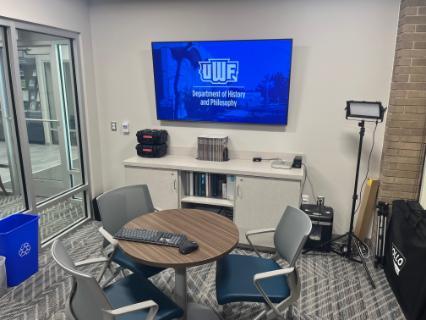
The UWF Digital Humanities Lab is an individual and small-group workspace equipped with tools and technologies for scholars working in the digital age.
Lab Hours
- The Lab's anticipated reopening is currently scheduled for Fall 2026! The Department is working to expand the technology and digital services available for student use. Stay tuned for more information!
Visit uwf.edu/DHLab for more information on lab resources and procedures.
History and Philosophy News
-
Tue, 17 Feb 2026 14:30:00 +0000Tue, 17 Feb 2026 14:30:00 +0000Pensacola Museum of History opens new military textile exhibit
-
Wed, 15 Mar 2023 13:30:00 +0000Wed, 15 Mar 2023 13:30:00 +0000UWF sophomore reappears on ‘Jeopardy!’ for second time
-
Wed, 24 Mar 2021 13:46:19 +0000Wed, 24 Mar 2021 13:46:19 +0000Two loves collide, leading history professor to UWF
History

Students may pursue a minor, major or graduate degree in history studies. Learn more about history studies.
Philosophy

Students may pursue a minor or major in Philosophy. Learn more about studies in Philosophy.
Vietnam War Experiences Told Like Never Before: UWF Students Visit Azalea Trace Retirement Community

In Fall 2025, two classes took on an ambitious project: document the hardships of the Vietnam War and tell the real stories of our country’s veterans. Hands-on student experience comes face-to-face with the labors of war, culminating in the Vietnam Veteran Experience Oral History Project.
Led by Ms. Joyce Southard and Dr. Nathan Smith, AMH4990: Vietnam: At Home and Abroad and HIS4072 Oral/Community History conducted over thirty interviews with local veterans. Students worked diligently to record and transcribe these interviews, forming an expansive archive for future scholars to explore. Senior History Student Liberty Moench stated, “I hope my experiences influence others to explore their local communities and the stories that create them. It only takes one story to uncover a new narrative.” Ms. Southard and Dr. Smith are currently working to expand this project into a broader documentary, slated for release in the fall.