Chemistry
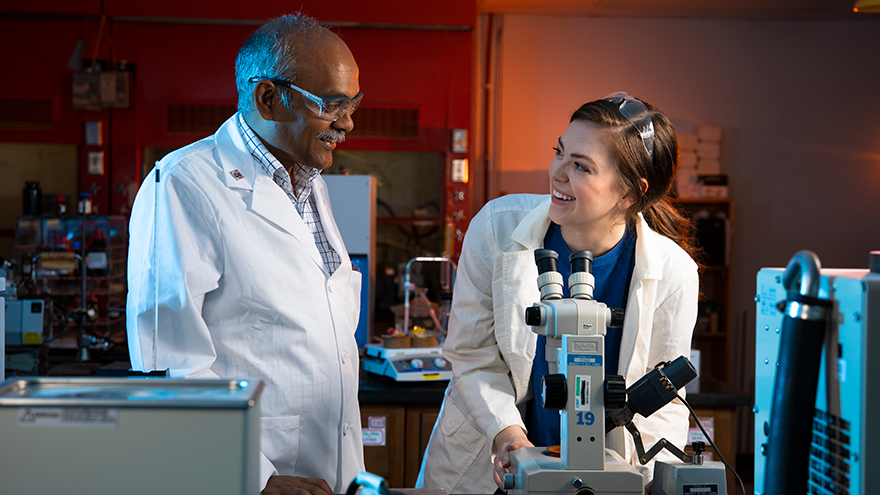
The Department of Chemistry courses at UWF are typically small, allowing our instructors to pay attention to individual students. Nevertheless, our laboratories are inordinately well-equipped with modern instrumentation.
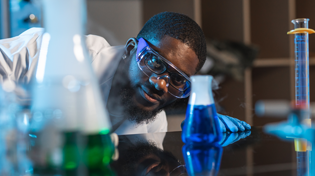
The Department of Chemistry courses at UWF are typically small, allowing our instructors to pay attention to individual students. Nevertheless, our laboratories are inordinately well-equipped with modern instrumentation. We pride ourselves on giving students hands-on training with state-of-the-art instrumentation, so our graduates are extremely well-prepared for the job market and professional or graduate school.
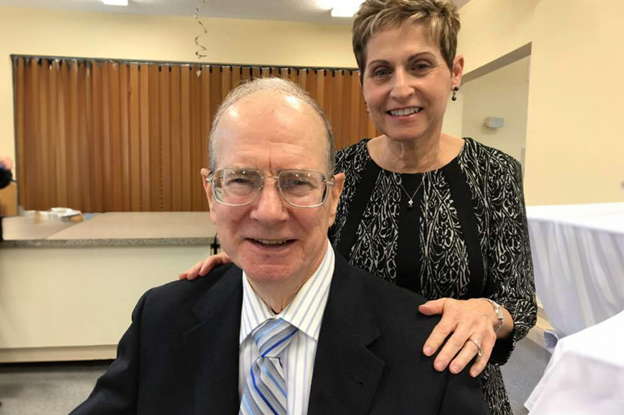
Dr. Frank and Dale Silver Distinguished Chemistry Endowment
The UWF Chemistry department recently received a $100,000 gift from the late Dr. Frank Silver to establish the Dr. Frank and Dale Silver Distinguished Chemistry Endowment The endowment will provide operational and scholarship support to chemistry students. Dr. Frank Silver was a longtime supporter and friend of the department. “Dr. Silver supported our department for decades and shared our commitment to helping students achieve their best,” said Dr. Karen Molek, chair of the Department of Chemistry. “He saw firsthand the difference his support makes in student success.” Before he passed away, Frank said, “At the end of my long career at Monsanto, I spent 10 years responsible for coordinated research at many U.S. and international universities. I must say that the care and support for undergraduate students by the UWF Chemistry Department are second to none.”
Link to full story: Frank and Dale Silver Distinguished Chemistry Endowment
Support chemistry students with the Frank and Dale Silver Distinguished Chemistry Endowment
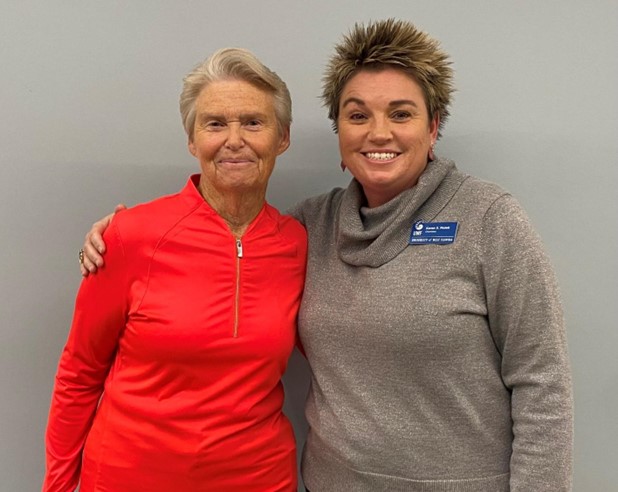
Chemistry welcomes back Beth Calhoun at the UWF/American Chemical Society Industry Career Event.
The UWF Chemistry with the support of a grant from the American Chemical Society hosted an Industry Career Event. Representatives from Ascend, Cytiva Lifesciences, Florida Department of Law Enforcement, Pegasus Laboratories, Plasmine Technology, and Separation Systems participated in a panel discussion with students about industry careers. Following the panel discussion, we held a “career fair” style event where students had an opportunity to speak directly with industry representatives about potential internships and openings. We also recognized the first female graduate from the chemistry department, Beth Calhoun, who had a successful 35+ year career in industry. She was able to talk to students about her experiences over her career.
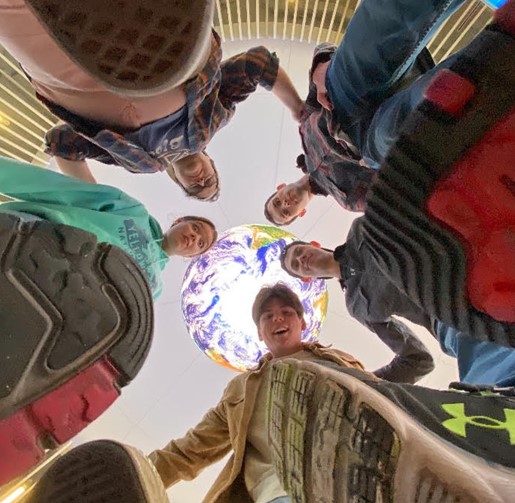
UWF Students Attend Annual Biomedical Research Conference for Minoritized Students
In Fall 2023, 11 UWF students attend ABRCMS in Phoenix, AZ. Students attended research presentations, poster sessions and networked with graduate school representatives. Among those attending, two students received monetary awards for their presentations, Jason Neidigk - Biochemistry and Biomedical Sciences Senior – presentation in Cancer Biology and Heaven Brandt - Biomedical Sciences Junior – presentation in Immunology.
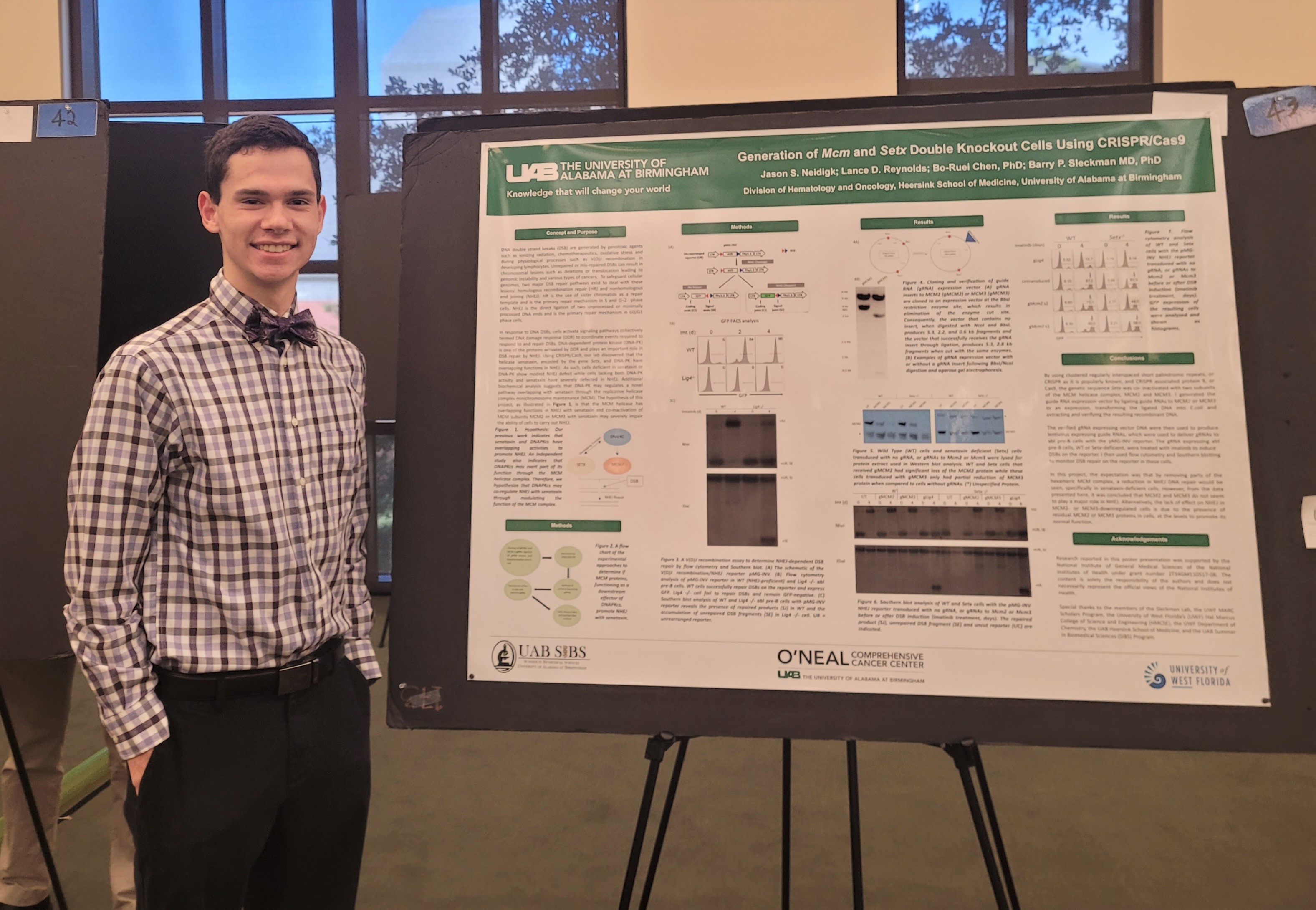
UWF Student receives HIP Student Showcase Best Internship/Field Experience Project award
Jason received the High Impact Practices Best Internship/Field (HIP) Experience Project award for his project titled Generation of Mcm and Setx Double Knockout Cells Using CRISPR/Cas9 from the UWF Student Scholar Symposium in April 2023. Jason, a current MARC Scholar, and Chemistry Scholar at UWF, conducted his research with Dr. Barry Sleckman at the University of Alabama at Birmingham in Summer 2022.
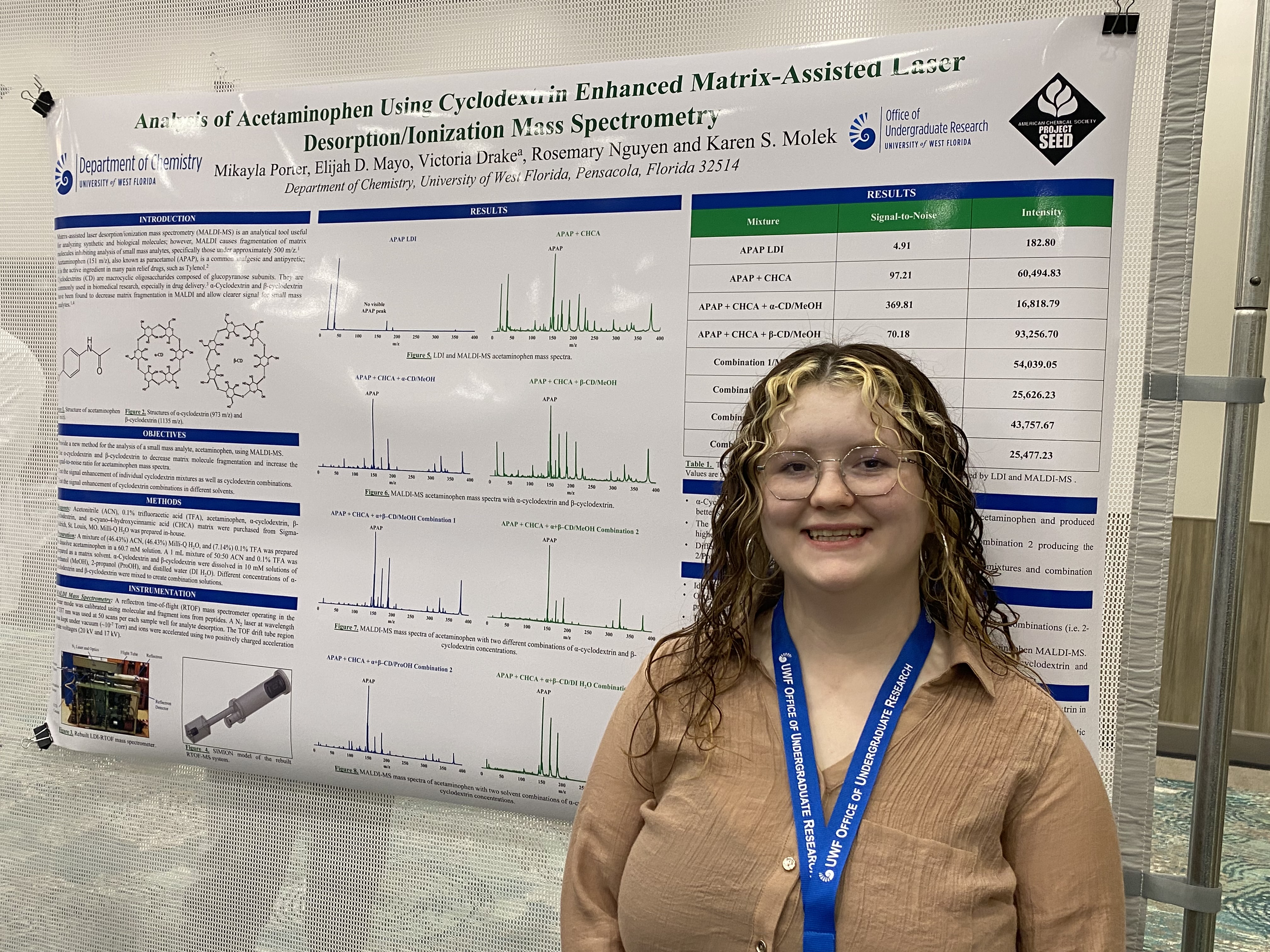
UWF Student awarded the ACS Project SEED College Scholarship
Mikayla was awarded a Project SEED College Scholarship from the American Chemical Society (ACS) for the 2023-2024 academic year. Mikayla, a current STEM Scholar, and Chemistry Scholar at UWF, is mentored by Dr. Karen Molek researching SALDI and MALDI analysis of small molecules.
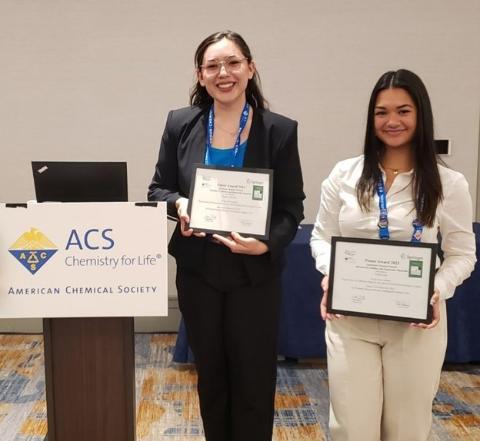
UWF students win research poster competition at the 2023 American Chemical Society National Meeting
Coauthors Bianca Dawson and Farah Lino recently won Best Undergraduate Poster Award in the Division of Cellulose and Renewable Materials at the National Meeting of the American Chemical Society in Indianapolis, IN. The two UWF Chemistry majors presented research titled Preparation of chitosan-based films for photosensitization of singlet oxygen and are working in collaboration with Dr. Patrick S. Barber (Chemistry faculty). Their research seeks to develop sustainable methods and materials for water purification and environmental remediation.
Each year, the ACS Cellulose and Renewable Materials (CELL) Division in collaboration with Springer, the publisher of the periodical CELLULOSE, recognizes the outstanding research presented by students at the ACS Spring National Meeting. The awards recognize students who communicate with a clear understanding of the originality and creativity of their investigations into applications of cellulose chemistry and renewable materials. Winners are selected by a panel of judges who evaluate all eligible entries during the CELL Division poster session.
Chemistry News
-
Tue, 28 Nov 2023 14:37:17 +0000Tue, 28 Nov 2023 14:37:17 +0000Lifelong scientist and accomplished businessman the late Dr. Frank Silver established Dr. Frank and Dale Silver Distinguished Chemistry Endowment
-
Tue, 17 Aug 2021 14:06:14 +0000Tue, 17 Aug 2021 14:06:14 +0000UWF’s Chemistry Scholars Program receives 2021 Inspiring Programs in STEM award
-
Wed, 30 Jun 2021 14:12:17 +0000Wed, 30 Jun 2021 14:12:17 +0000UWF chemistry department achieves high acceptance rate for students attending top 25 doctoral programs
 RSS
RSS