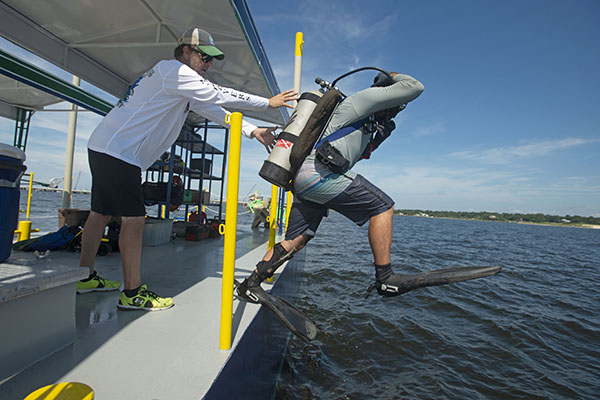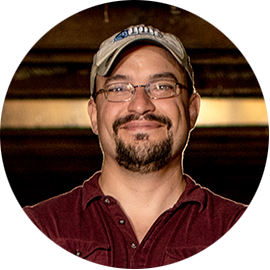
Underwater Archaeology Field Methods is an intensive course designed to simultaneously teach students field techniques of archaeological excavation and documentation of underwater sites while producing outstanding archaeological results from the projects being worked on. Directing the field school this summer is Dr. John Bratten and Greg Cook, both professors of archaeology at The University of West Florida.
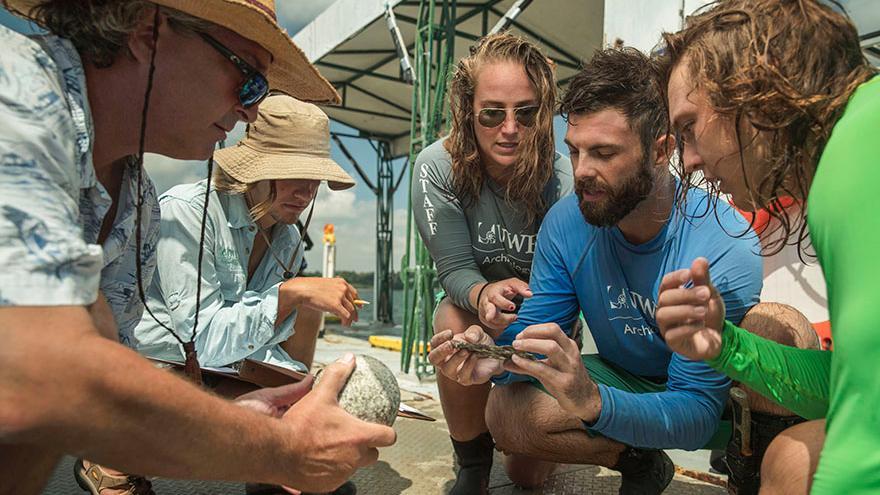
During the course of the summer, field school students’ activities will include utilizing remote sensing survey using magnetometer and side scan sonar equipment, site testing and excavation on potential sixteenth-century shipwreck sites in Pensacola Bay, and hull recording and underwater photography of a nineteenth-century sidewheel steamboat in Seminole, Alabama, as well as site assessments and dives on known historic wrecks located in the area. UWF graduate students Wayne Abrahamson (Graduate Field Director, Seminole Operations) and Brian Adams (Graduate Field Director in training) will lead the way with support from fellow graduate supervisors in training Kendra Kennedy, Christine Mavrick, Bill Neal, Dean Nones, and Nicole Tumbleson. When not diving, students will perform topside duties such as dive tending and support, artifact recording, and database entry. While fieldwork is the focus of the summer session, it will also be supplemented by lectures and discussions on themes ranging from the colonization of northwest Florida, maritime landscapes and economic maritime connections in the Gulf region. Students may also be called on to participate in the conservation and laboratory analysis of recovered material.
By the end of the summer the students will have an understanding of the role of watercraft in the historic and economic development of the Gulf Region, basic ship construction and ability to recognize features of historic wrecks in Pensacola and surrounding waters, the role of seafaring in the colonization of Florida, and be able to identify maritime landscapes and their various components. They will also leave with an “archaeological toolkit” filled with tools such as a functional knowledge of working on boats and boating safety, basic knots, use of remote sensing and survey instruments, underwater navigation, underwater communication, GPS navigation, recording data underwater, “multi-tasking” while diving, underwater search patterns, underwater excavation, underwater site testing, hull recording, laying baselines and taking offset measurements, generating scale drawings, Direct Survey Method computer mapping system, and documentation procedures (field introduction to conservation notes, forms, and recovery bags). With these basic skill sets, the students will leave field school as competent underwater archaeologists.